


Cutting Reinforced Concrete: What Changes When Rebar Is in the Slab
When rebar is in the slab, you’re cutting reinforced concrete, so the blade, the water, the cutting speed and the planning all change. A fit-out program might show a wall opening due next week, but the steel inside that wall decides how long the cut takes, what saw goes in, and whether an engineer needs to sign off first. Worth sorting now, not on the morning the crew turns up and finds two layers of bar where the drawings showed one.
The Short Answer
What changes when steel is in the slab
- The blade works harder. Steel slows the cut and wears diamond segments faster than plain concrete.
- Water is non-negotiable. Wet cutting cools the blade on the bar and keeps silica dust under WorkSafe limits.
- The saw doesn’t reach deeper or shallower. Rebar changes how long a cut takes, not how deep the saw can go.
- Structure comes into it. Cutting bar in a load-bearing wall, beam, column or suspended slab needs engineer sign-off.
- Post-tensioned tendons are a hard stop. They get located and approved by an engineer before anyone cuts near them.
0.05mg/m³
Victoria’s exposure standard for respirable crystalline silica, averaged over an 8-hour day
~10%
Concrete’s tensile strength is roughly a tenth of its compressive strength, which is why the steel is there
150 to 200mm
Typical reach of a track-mounted floor saw, with or without rebar in the slab
1,000+
Residential, commercial and industrial projects across 20+ years in Melbourne
What Reinforced Concrete Is and Why It Changes the Cut
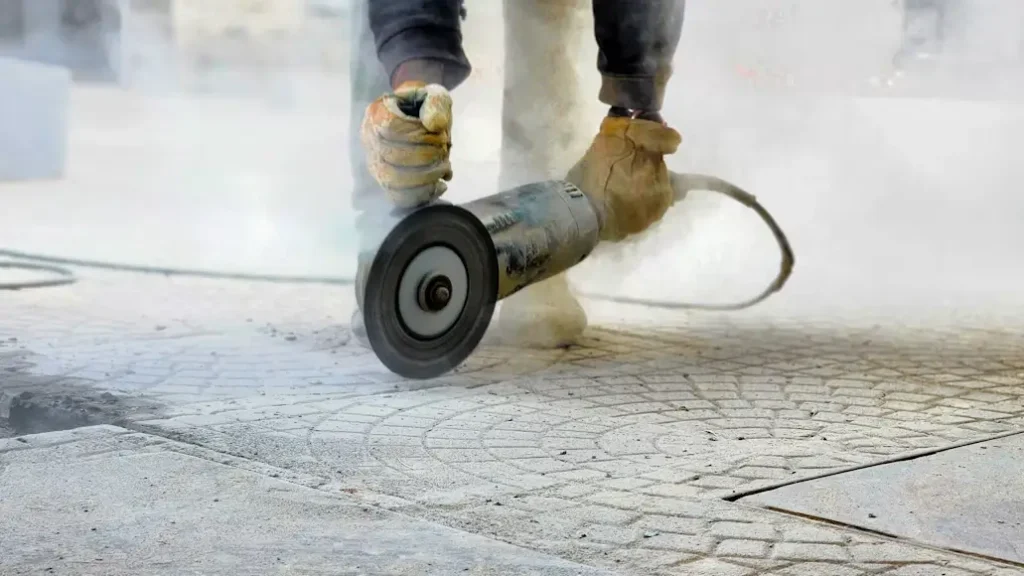
Concrete handles being squashed. It doesn’t handle being pulled. Steel cast into the slab takes the tension, and the two work together as one structural element.
For the saw, that’s two different materials in the same cut. A diamond blade gets through aggregate cleanly. Steel is softer and gummier, and it fights the blade in a different way.
Concrete on the blade
- Hard, abrasive aggregate
- Wears the bond and exposes fresh diamonds
- Keeps the blade cutting freely
- Strong in compression, weak in tension
Steel on the blade
- Softer, gummier material
- Can glaze the segments over
- Slows the feed rate at every bar
- Carries the tension the structure relies on
And because the steel is doing a structural job, cutting it isn’t just making a hole. Take bar out of the wrong spot, and you’ve changed what’s holding the slab or wall up.
Rebar, Mesh and Post-Tensioned Cables: Knowing What’s in the Slab
The steel you’re dealing with changes the job more than most people expect.
| Reinforcement | Where It Usually Turns Up | What It Means on the Saw | Risk Level |
|---|---|---|---|
| Mesh (welded wire fabric) | Residential and domestic slabs, driveways, paths | Light steel, slows the blade a little | Low |
| Deformed bar (rebar) | Commercial floors, walls, beams, columns, industrial slabs | Heavier steel, slower cutting, more blade wear | Medium |
| Post-tensioned tendons | Suspended slabs in many commercial and multi-storey buildings | Steel under high tension, not cut without engineering sign-off | High |
| Precast panels | Precast walls on industrial and commercial sites | Reinforcement set by the precast design, confirm before cutting | Medium |
A homeowner cutting a drainage channel through a driveway is usually dealing with mesh. A builder opening walls in a commercial building can strike all four, sometimes on one floor.
No drawings? Assume there’s steel.
It happens more than you’d think on older buildings. Treat the slab or wall as reinforced until it proves otherwise, and plan the blade, the water and the timing around that.
Why Steel Slows the Blade and Wears Diamond Segments
Diamond blades keep cutting because the metal bond around the diamonds slowly wears away and exposes fresh ones. Gritty aggregate keeps that going. Steel doesn’t. It can glaze the segments, polishing them over until the blade stops biting.
You can hear it on the tool. The cut slows each time the blade meets bar, the operator eases off the feed rather than forcing it, and on heavily reinforced work the blades simply wear out sooner. Picking a blade suited to both the concrete and the steel is what keeps the cut straight and the time down.
How much steel shortens blade life
Indicative linear cutting distance from one diamond blade, as a share of unreinforced slab life
Unreinforced slab
Heavily reinforced slab
Source: example figures published by Penhall, a US concrete cutting contractor (150 to 200 linear feet in heavily reinforced slab). Actual blade life varies with the blade, the mix and the steel.
On a long reinforced cut, a blade change partway through isn’t unusual, and it’s better allowed for in the plan than discovered on the day.
Wet Cutting Through Steel: Cooling, Dust and Silica Limits
Wet cutting is standard on any real-scale job, and reinforced concrete is where you feel the difference. Water keeps the segments from overheating on the steel, flushes slurry out of the kerf, and keeps silica dust down.
That dust is the bit that can’t be skipped. In Victoria, the workplace exposure standard for respirable crystalline silica is 0.05mg/m³ averaged over an 8-hour day, and it drops to 0.035mg/m³ for a 10-hour shift. Dry cut a reinforced slab on a live site with no suppression or extraction and you’ll go over that early in the job.
Silica exposure limits in Victoria
Respirable crystalline silica, mg/m³ of air
Exposure standard, 8-hour day
Adjusted standard, 10-hour day
WorkSafe’s recommended precautionary level
Source: WorkSafe Victoria, Construction: Preventing exposure to crystalline silica dust.
Concrete carries less silica than some materials, but it’s still enough to matter on a saw. WorkSafe Victoria puts typical crystalline silica content at:
| Material | Typical Crystalline Silica Content |
|---|---|
| Sandstone |
70 to 90%
|
| Granite |
25 to 60%
|
| Concrete |
Under 30%
|
Here’s what dust control on a reinforced cut looks like in practice, in line with WorkSafe Victoria’s guidance:
- Water at the blade on every saw and core rig, with slurry kept from drying out.
- On-tool extraction connected to a Class M or Class H vacuum where water can’t run freely.
- Fit-tested respiratory protection with at least a P2 filter that meets AS/NZS 1716.
- No dry sweeping, compressed air or high-pressure water for clean-up.
- A hazard control statement in place before any work that counts as high risk crystalline silica work.
Near live electrical gear or over finished floors, where water can’t run freely, dust extraction does the job instead. The slurry still gets cleared before the crew leaves, because the next trade shouldn’t inherit it. For more on when each method suits, see our guide to wet vs dry concrete cutting.
Choosing the Right Saw: Floor, Wall, Ring and Hand Saws
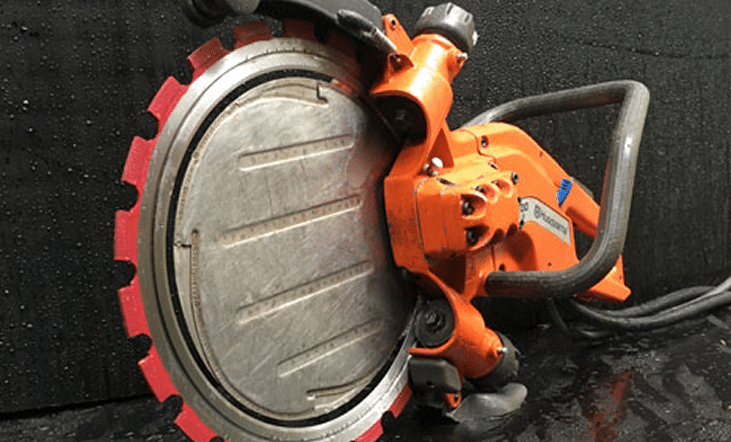
Access picks the saw as much as the cut does. Plenty of jobs use two or three of these, plus core drilling for round holes. The kit on our jobs is Husqvarna saws and diamond core rigs.
| Method | Best For | Typical Depth | Access Needed |
|---|---|---|---|
| Floor or road saw | Slabs, driveways, trenches, carriageways | 150 to 200mm | Open, flat surface |
| Wall saw | Doorways, windows, lift shafts, structural openings | Confirmed at the site walk | Track fixed to the wall face |
| Ring saw | Deep, awkward cuts near walls or pipes set in a slab | Around 300mm | Handheld, tight spots |
| Hand saw | Stairwells, corners, confined spaces | Shorter, shallower cuts | Where a track saw can’t reach |
| Core drill | Round holes for plumbing, electrical and HVAC | As deep as the hole requires | Rig fixed to floor, wall or ceiling |
Wall sawing is the work behind the openings at Lowther Hall, Karingal Hub and the BYD dealership in Kew. Not sure which applies to your job? Our slab sawing vs wall sawing guide breaks it down.
An angle grinder or a hire-shop saw might get through a thin path. On reinforced commercial concrete, it won’t cut properly, and it won’t cut safely.
How Deep You Can Cut Reinforced Concrete by Saw Type
Depth comes down to the saw. The steel doesn’t change how deep a saw can reach. It changes how long it takes to get there.
Typical cutting depth by method
Millimetres, scaled to a 300mm reference
Track-mounted floor saw
Ring saw
Diamond core rig
Thicker sections than that, like post-tensioned slabs and bridge deck work, are wire sawing territory, which is specialist work. There’s more detail in our guide on how deep a concrete saw can cut.
Planning Cut Lines Around Reinforcement in Older Melbourne Buildings
Older buildings are where drawings let you down. Services get added, walls get altered, and the paperwork never catches up. Every site gets walked before quoting for exactly that reason.
If something sits on the line, the line moves. Better to shift a cut than push through and hope.
Twenty-plus years cutting across Melbourne also teaches you where reactive clay shifts a slab and which inner-suburb foundations need a different approach. That local knowledge shapes the plan before a saw starts.
From Site Walk to Clean Handover
1
Walk the Site
What’s in the slab, what the drawings missed, and how the access works.
2
Plan the Cut
Saw, blade, depth and water sorted before the quote goes out.
3
Cut and Clear
Wet cutting to the line, slurry cleared, area handed back for the next trade.
When Cutting Rebar Needs a Structural Engineer
The engineer sets the position and size, any temporary propping, and what goes back in afterwards. Concrete structures in Australia are designed to AS 3600, and that design assumed the steel would stay where it was put.
Get engineer sign-off before cutting when:
- The cut goes through a load-bearing wall, beam or column
- The opening is in a suspended slab
- A new opening changes how load moves through the building
- Several cores sit close together, or near the edge of a beam or slab
- The slab is, or might be, post-tensioned
The cutter’s job is to cut what’s been approved, exactly to the line, and to stop and raise it if what’s on site doesn’t match the design.
Why Post-Tensioned Slabs Need Extra Care Before Any Cut
Post-tensioned slabs carry steel tendons that are stressed after the concrete goes off. Cut one and that stored energy can be released suddenly, damaging the slab and putting people nearby at risk.
Warning Signs
Clues a slab could be post-tensioned
- Anchor pockets or capped tendon ends along the slab edges
- Post-tensioning shown or noted on the structural drawings
- A thin suspended slab spanning further than you’d expect
- A commercial or multi-storey building with suspended floors
There’s no quick fix after the fact. A severed tendon means a structural engineer, a repair plan, and usually days off the program. So tendons get located, and an engineer signs off before anyone cuts near them. Scanning is one way to locate them, and our guide to ground penetrating radar (GPR) explains how it works and where it has limits.
Cutting Reinforced Concrete on Live and Occupied Sites
A lot of this work happens in buildings that are still in use. On jobs like these, the cut itself is half the work. Dust, noise, slurry over finished floors and confirmed arrival times matter just as much, because the building has to keep running around you.
Education, Live Site
Lowther Hall Anglican Grammar School
Lift shaft openings, wall sawing and core drilling on a working school site.
Retail, Trading
Karingal Hub Shopping Centre
Structural wall openings inside a trading shopping centre.
Automotive, Fit-Out
BYD Dealership, Kew
A structural wall opening for the showroom, cut to suit the program around the other trades.
That’s typical of commercial work. The cut has a slot in the schedule, and missing it holds up everyone booked in after. See more of this work on our commercial concrete cutting page.
How Rebar Affects Cutting Time and Cost
Pricing comes down to saw type, slab thickness, reinforcement and site access, with slurry management adding to some jobs. Steel pushes up two things directly: cutting time and blade wear.
| Price Factor | How Reinforcement Affects It |
|---|---|
| Saw type | Heavier steel needs the right blade and the right machine for the access |
| Slab thickness | Thicker sections often carry more layers of bar |
| Reinforcement | Slower feed rate and more blade wear on every metre |
| Site access | Tight spots can mean a smaller saw and a longer cut |
| Slurry management | Longer cuts make more slurry to capture on live or finished sites |
A domestic plumbing core and a saw cut across a 300mm reinforced commercial floor aren’t priced anywhere near each other. That’s why the quote comes after the site is assessed. You get a real number, not a placeholder figure. For a broader look at pricing, read concrete cutting cost per metre.
Why Reinforced Concrete Cutting Is a Job for Professionals
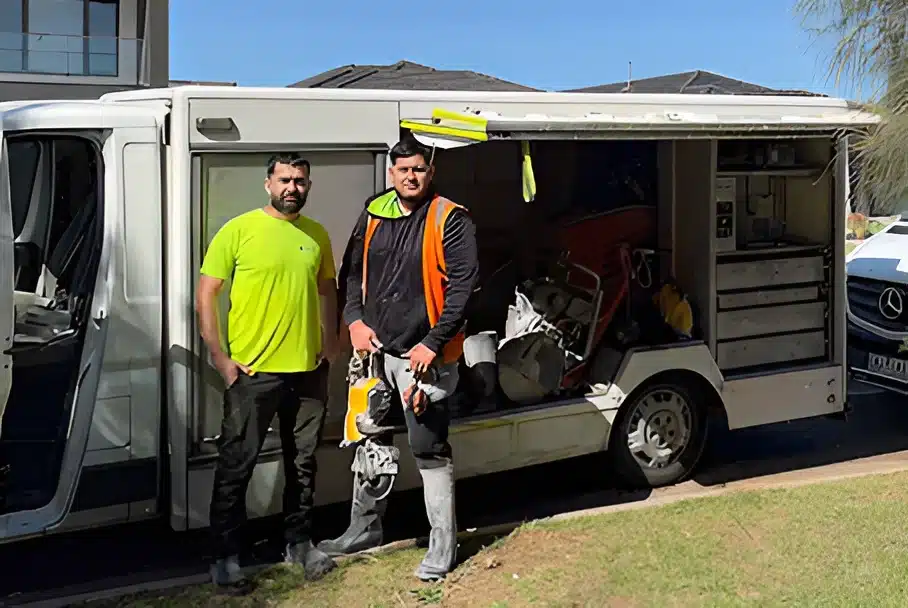
Hit a live cable, cut the wrong bar or blow the silica limit on an occupied site, and the cost lands on the whole project. That’s a lot riding on whoever’s holding the saw.
| On the Job | Hire-Shop Saw | Professional Crew |
|---|---|---|
| Blade choice | General-purpose blade | Matched to the concrete and the steel |
| Depth | Limited to the hire machine | Floor, wall, ring, hand saws and core rigs |
| Silica control | Up to the user | Wet cutting and extraction as standard |
| Structural checks | Often skipped | Cuts made to engineer-approved lines |
| Insurance | Your risk | Full public liability cover on every job |
Melbourne Concrete Cutters is family-owned and operated, fully licensed, insured and WorkSafe compliant, with full public liability cover on every job. Over 20+ years, that’s added up to 1,000+ residential, commercial and industrial projects. If you’re weighing up doing it yourself, read DIY concrete cutting: why hiring a pro matters first.
Reinforced Concrete Cutting FAQs
Can a concrete saw cut through rebar?
Does rebar change how deep you can cut?
Do I need an engineer before cutting reinforced concrete?
Can you cut a post-tensioned slab?
Is wet cutting required for reinforced concrete?
How do I know if there’s rebar in my slab?
What should I send through for a quote?
Talk to Us About Your Reinforced Concrete Job
Know the wall or slab thickness and roughly what’s being cut? Send through the site details and access. We work across Melbourne, plus Geelong and Bendigo, and every quote starts with a look at what’s actually on site.