


Industrial Concrete Cutting Melbourne
Industrial Concrete Cutting For Factories And Warehouses
Industrial concrete cutting in Melbourne covers warehouse conversions, plant upgrades, and work on concrete slabs poured decades before current standards existed, often carried out around live operations rather than on a shut-down site. A late arrival costs every trade booked in after the concrete cutter, and on an industrial site that can mean a production line waiting on a cut that was meant to be done overnight. Over 20 years of operating history and more than 1,000 completed concrete cutting projects sit behind Melbourne Concrete Cutters, spanning residential, commercial, and industrial concrete. We are fully licensed, insured, and WorkSafe compliant, and the same crew that assesses an industrial site is the one that shows up with the saw. Contact Melbourne Concrete Cutters today and get a free quote!Floor Sawing And Removal Around Live Operations
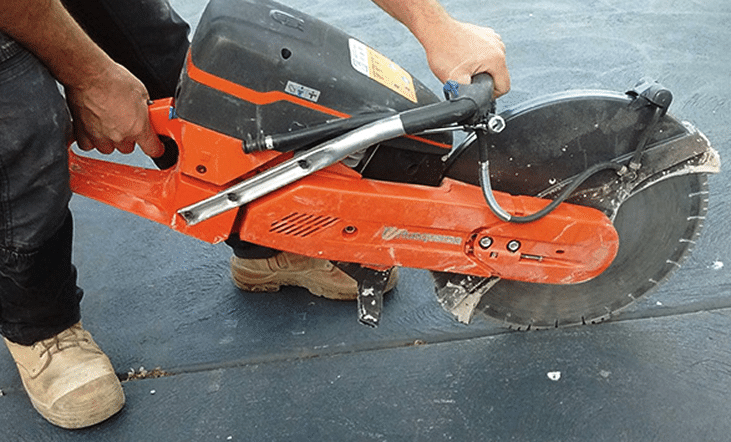 Floor sawing cuts through concrete slabs for removal, service penetrations, or demolition prep. On an industrial site that work often has to happen around a plant still running, stock still moving, or staff still on the floor, so the concrete cutting plan has to account for what stays operational, not just what the drawings show.
Concrete removal is a proven capability here, not a side note.
Floor sawing cuts through concrete slabs for removal, service penetrations, or demolition prep. On an industrial site that work often has to happen around a plant still running, stock still moving, or staff still on the floor, so the concrete cutting plan has to account for what stays operational, not just what the drawings show.
Concrete removal is a proven capability here, not a side note.
Speedy Way, Industrial & Civil: every edge checked before the crew moved on, so whatever was left behind could still carry load on its own.
Heavy Equipment Base Installations And Modifications
New plant, machinery bases, and equipment footings on an industrial floor usually mean cutting and removing an existing section of concrete slab before a new base goes in. Diameter, depth, and access get confirmed first, because the fit has to match the equipment being installed, not an approximate opening. A machinery base rarely stays fixed once it’s in. Future upgrades often need another round of drilling or sawing services to widen a footing, add a fixing point along the wall, or run conduit through the concrete. Getting that first cut right, with a hand check where the saw can’t reach the wall edge, means the next round of drilling won’t fight an undersized opening, and trimming done by hand cuts down the hand finishing needed on the concrete later. Melbourne fabricators running a plant changeover usually run electrical and rigging services on the same timetable, so sawing and drilling services need to land inside a fixed time slot. On multi-base projects, Melbourne teams handling several projects together keep the concrete cutting, wall work, core drilling, and concrete removal under one service, rather than juggling separate services, sawing schedules, and time slots for each base. Contact our team at Melbourne Concrete Cutters early with equipment drawings and a rough timeframe, and stay in contact if plans shift. A service scoped to the real footings, not a generic contact form or a rushed service, saves time on Melbourne projects where several bases, trades, and supporting services move through the same space.Structural Alterations For Plant And Warehouse Upgrades
Warehouse and plant upgrades often call for wall or floor openings that were never part of the original build: a new dock door, a mezzanine penetration, or a structural opening to fit a larger piece of equipment through. That work is handled the same way a commercial structural opening is: the site walked, what’s actually there checked, and the cut planned to fit the space rather than the other way around. Not every warehouse opening behaves the same once it’s cut. A floor opening for a mezzanine penetration usually needs temporary support in place before the concrete comes out, since the slab above is still carrying load during the concrete cutting, while a wall opening for a dock door carries less risk once the concrete cutting is done and the frame goes in. Matching the new concrete to what’s already there counts too, particularly on a floor a forklift will run over. An infill poured to a different strength than the original concrete slab can crack along that seam, so the concrete going back in gets specified to suit the load, not just the opening size. Getting that detail right before concrete cutting starts saves a second visit to fix an edge that never should have failed.Core Drilling For Services Through Industrial Slabs
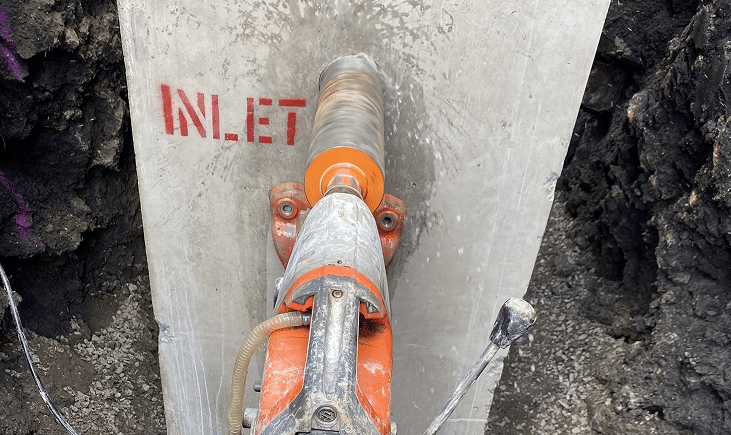 Plumbing, electrical, and HVAC runs through an industrial slab need holes drilled to an exact diameter and depth, matched to the install rather than rounded up for convenience. Industrial slabs are just as likely as any other to have reinforcement, conduit, or a live cable sitting where the hole is meant to go, so that gets checked before the drill starts.
Cutting On Older Slabs Poured Before Current Standards
Non-destructive scanning happens before every relevant cut or core, especially on slabs poured between the late 1970s and mid-1990s, where post-tensioned cables are a real risk. Scan results decide the cut before the saw ever gets switched on. If a cable sits where the line was meant to run, cutting shifts a few centimetres rather than pushing through and hoping the drawings were right.Working Safely Around Operating Machinery And Staff
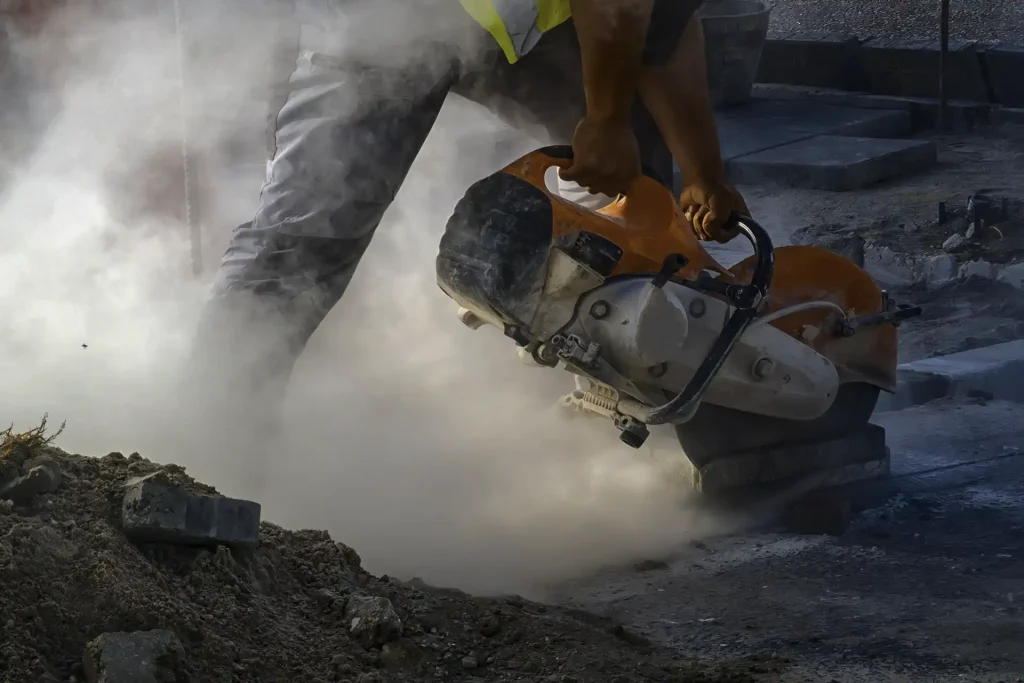 Cutting concrete on a site with machinery still running and staff still working calls for the same access and timing plan used on any occupied commercial site, adapted to an industrial floor. Arrival times, no-go zones, and quiet windows around shift patterns get confirmed ahead of time, so the cutting crew works around operations rather than through them.
Industry-Grade Diamond Equipment For Heavy-Duty Cuts
Industry-grade diamond equipment, Husqvarna saws and diamond core rigs, is used across every job, giving consistent results whether the cut is a single core hole or a full industrial floor removal. For heavier-duty work such as wire sawing or robotic demolition, that equipment is being added as the commercial and industrial side of the business grows; where a job genuinely needs it now, that gets flagged upfront.Scheduling Cuts Around Shift Changes And Production Runs
An industrial site rarely stops for a concrete cutting job, so scheduling has to work around shift changes and production runs rather than against them. Booking the wrong window is one of the most common reasons a job runs into conflict with operations, which is why access and timing get locked in before the crew arrives, not worked out on the day.WorkSafe Victoria Silica Limits On Every Industrial Job
WorkSafe Victoria sets a silica exposure limit of 0.05mg/m³ for construction work, and wet cutting paired with dust extraction is what keeps a job under that limit. That rule does not bend for an industrial floor, a school, or a driveway; skip water suppression or extraction and the threshold gets breached early, not eventually.Assess Against Operations
Site walked and checked against what needs to keep running.
Lock In The Booking
Diameter, depth, access and shift timing confirmed first.
Cut, Clear, Return The Floor
Wet cutting used, slurry cleared, floor handed back ready for the next stage.
What Drives The Cost Of An Industrial Concrete Cutting Job
Pricing on an industrial concrete cutting job centres on the same four things as any other site: saw type, slab thickness, reinforcement and site access, with slurry management adding to that on certain jobs. An industrial floor is often thicker and more heavily reinforced than a residential or light commercial slab, which is one reason a site-assessed quote matters more here, not less.Saw Type
Track, wall, hand, ring or core rig.
Slab Thickness
Often thicker than residential or light commercial.
Reinforcement
Industrial slabs are often more heavily reinforced.
Site Access
Plus slurry management on certain jobs.
Request An Industrial Concrete Cutting Quote
If a plant upgrade, warehouse conversion or older industrial floor needs cutting, coring or removal, send through the access details, slab thickness and operating hours to work around, and a specialist will scope it properly before any figure is put forward.