


Concrete Removal Melbourne
Concrete Removal Booked Straight Into The Cutting Job
Concrete removal in Melbourne is the cutting and clearing of an existing concrete slab, driveway, or floor section, and it is rarely a job on its own. It usually gets booked in alongside the cut that creates it, because once a floor or concrete slab is cut into sections, getting it out and off site is the next step in the same visit rather than a second call-out. Melbourne Concrete Cutters is a family-owned and operated business with more than 20 years behind it and over 1,000 residential, commercial, and industrial projects completed, fully licensed, insured and WorkSafe compliant throughout. The person who will quote the concrete removal project walks the site first, then turns up with the crew to do the cutting and clearing work themselves. Contact our team at Melbourne Concrete Cutters and get a free, tailored quote today!Driveway, Slab, And Patio Removal For Renovations
 A driveway coming out to make way for a new one, an old patio slab removed for a garden bed, or a section of path cleared for an extension project, all start with cutting the concrete into manageable sections before anything is lifted out. Concrete cutting first keeps the removal controlled, rather than breaking concrete up at random and dealing with whatever comes loose.
Cutting the concrete first, then lifting it out in controlled sections, is what makes a driveway, slab, or patio removal manageable rather than a demolition free-for-all.
A driveway, slab, or patio removal for a Melbourne renovation project always starts the same way: cut the concrete into sections before demolition services begin, so there’s no need to break concrete apart at random once demolition and excavation services get underway. That order keeps excavation controlled, whether it’s a driveway needing extra excavation or a simple patio cut, and lets a team remove each section in the right order instead of guessing what comes loose next, which matters on any project where several trades are booked in close together.
Get a quote early so our team at Melbourne Concrete Cutters can get the right equipment sorted before the job starts. Not every job will need the same equipment, and Melbourne renovations that run across several projects together, a new concrete slab, a garden bed, an extension, often need one team for every stage rather than separate services for each. These projects tend to overlap with other trades, so keeping services in one place, one quote, one team, makes juggling multiple projects easier to manage.
Melbourne Concrete Cutters can talk through what a project needs, confirm the quote, and line up the right equipment, team, and services to remove the old concrete, remove dust, remove any leftover debris, and handle any demolition still on the list.
A driveway coming out to make way for a new one, an old patio slab removed for a garden bed, or a section of path cleared for an extension project, all start with cutting the concrete into manageable sections before anything is lifted out. Concrete cutting first keeps the removal controlled, rather than breaking concrete up at random and dealing with whatever comes loose.
Cutting the concrete first, then lifting it out in controlled sections, is what makes a driveway, slab, or patio removal manageable rather than a demolition free-for-all.
A driveway, slab, or patio removal for a Melbourne renovation project always starts the same way: cut the concrete into sections before demolition services begin, so there’s no need to break concrete apart at random once demolition and excavation services get underway. That order keeps excavation controlled, whether it’s a driveway needing extra excavation or a simple patio cut, and lets a team remove each section in the right order instead of guessing what comes loose next, which matters on any project where several trades are booked in close together.
Get a quote early so our team at Melbourne Concrete Cutters can get the right equipment sorted before the job starts. Not every job will need the same equipment, and Melbourne renovations that run across several projects together, a new concrete slab, a garden bed, an extension, often need one team for every stage rather than separate services for each. These projects tend to overlap with other trades, so keeping services in one place, one quote, one team, makes juggling multiple projects easier to manage.
Melbourne Concrete Cutters can talk through what a project needs, confirm the quote, and line up the right equipment, team, and services to remove the old concrete, remove dust, remove any leftover debris, and handle any demolition still on the list.
Floor Removal For Commercial And Industrial Sites
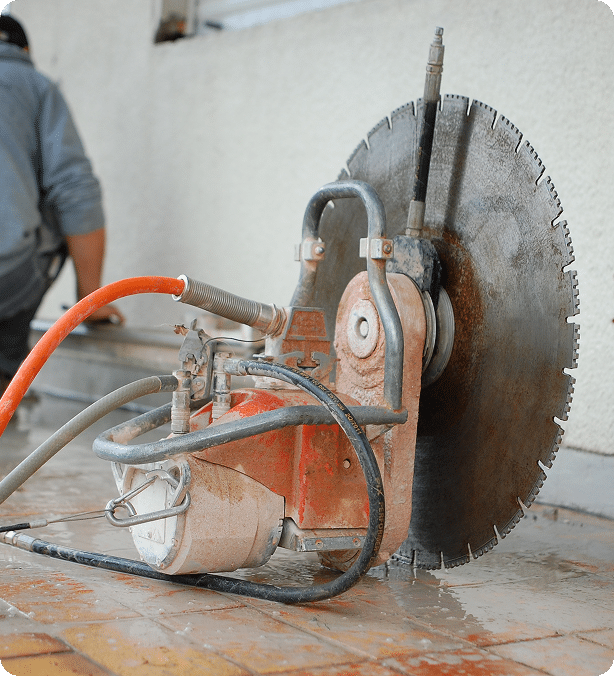 On a commercial or industrial project, floor removal is usually a bigger job: a section of warehouse floor coming out for a new footing, or a full floor removed as part of a demolition or fit-out. Floor sawing cuts the concrete slab to size first, and removal follows in the same sequence used on a smaller residential job, scaled up.
A Melbourne warehouse or industrial floor rarely comes out in one lift. Most projects remove it bay by bay, so excavation for a new footing can start in one section while concrete cutting continues in the next, without the concrete blocking access for excavation elsewhere.
What’s underneath the concrete slab often decides how much excavation is needed. Old fill, buried services, or uneven bedding can mean more material needs to come out before a new pour goes in, and this applies across most industrial projects, not just the larger ones. Crews typically remove one bay before moving to the next, so the schedule for concrete cutting and concrete removal stays predictable, and any related services don’t need reworking once the job is underway.
Bigger projects also mean more to remove off the premises, concrete, fill, old bedding, so Melbourne Concrete Cutters lines up concrete removal and disposal alongside the cutting itself. Keeping trucks moving instead of stockpiling material matters most when other trades and services are booked in around the same schedule.
On a commercial or industrial project, floor removal is usually a bigger job: a section of warehouse floor coming out for a new footing, or a full floor removed as part of a demolition or fit-out. Floor sawing cuts the concrete slab to size first, and removal follows in the same sequence used on a smaller residential job, scaled up.
A Melbourne warehouse or industrial floor rarely comes out in one lift. Most projects remove it bay by bay, so excavation for a new footing can start in one section while concrete cutting continues in the next, without the concrete blocking access for excavation elsewhere.
What’s underneath the concrete slab often decides how much excavation is needed. Old fill, buried services, or uneven bedding can mean more material needs to come out before a new pour goes in, and this applies across most industrial projects, not just the larger ones. Crews typically remove one bay before moving to the next, so the schedule for concrete cutting and concrete removal stays predictable, and any related services don’t need reworking once the job is underway.
Bigger projects also mean more to remove off the premises, concrete, fill, old bedding, so Melbourne Concrete Cutters lines up concrete removal and disposal alongside the cutting itself. Keeping trucks moving instead of stockpiling material matters most when other trades and services are booked in around the same schedule.
Where The Removed Concrete Goes Once It Leaves Site
Once concrete is cut and broken into sections, it gets loaded out and taken off site so the area is clear for the next stage of the job, whether that is a new pour, landscaping, or the next trade moving in. Confirming access for loading out, including where a truck or trailer can get to, is part of planning the job before the concrete cutting starts. A rough weight estimate before concrete cutting starts helps decide how many loads a project will actually need, since concrete is far heavier than it looks once it’s broken into sections. Underestimating this usually means an extra truck booked in on the day, which can hold up whatever’s meant to happen next. Council roads and shared driveways sometimes need a permit before a loaded truck can use them, so it’s worth checking this before the concrete comes up rather than after. Residential work might need one quick confirmation call, while a commercial or industrial job usually needs the paperwork sorted well in advance. Some jobs also need a disposal docket showing where the concrete ended up, particularly for builders who have to account for waste as part of a larger contract. Melbourne Concrete Cutters can factor this into the plan from the start, so the load-out doesn’t become the one part of the job nobody thought through.Checking Every Edge Before The Crew Moves On
Concrete removal is not just cutting on a bigger scale. Once concrete comes out, whatever is left behind has to carry load on its own, so the edge of every removal is checked before the crew moves on, not just cut and cleared. This matters most where excavation follows straight after, since a footing or trench dug against an unchecked edge can undermine it before the new work even goes in. That is different from an opening or a core hole, where the surrounding slab was never meant to stand alone. Reinforcement inside the concrete adds another layer to plan for. Rebar exposed mid-removal needs cutting or capping before it becomes a trip hazard or snags the next load out, and that step is built into the sequence rather than handled as an afterthought once the concrete is already up. Where excavation is planned close to a cut edge, checking that edge first means the excavation crew isn’t working blind against concrete that hasn’t been made safe, and any excavation for footings, drainage or services can start without the ground shifting underneath it.Signs A Slab Or Driveway Needs To Come Out
A few signs point to a slab or driveway being due for removal rather than a patch-up:- Cracking that runs through the slab rather than sitting on the surface
- A lifted or uneven edge that has become a trip hazard
- A slab that no longer suits the plan, such as a driveway being widened or a patio being replaced
- Damage from tree roots or ground movement affecting an older slab
Removal For Extensions, Pools, And New Driveways
An extension, a new pool, or a wider driveway usually means an existing slab has to come out first to make room. That removal work gets planned alongside the rest of the project, so the site is cleared and ready by the time the next trade or the pool installer needs it.Clean-Up And Handover After Every Removal Job
Slurry and debris get cleared before leaving every Melbourne site, because the next trade or the homeowner should not lose time to the mess left behind. Clean-up and handover matter just as much as the cut and removal itself.The Equipment Used To Break Up And Clear Concrete
Removal work starts with cutting the slab into sections using the same track-mounted, floor and hand saws used across every other service, rather than breaking concrete apart uncontrolled. Cutting first, then clearing the sized sections, keeps the job controlled and the site safer to work on while it is in progress.Proven At Speedy Way: 400mm Deep, 500m Of Floor Sawing
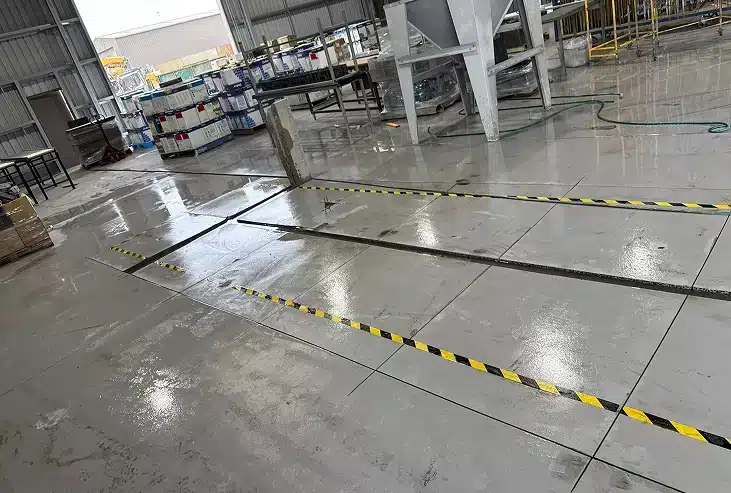 Concrete removal is a proven capability, demonstrated at the Speedy Way industrial and civil site: 400mm deep removal across roughly 500 metres of floor sawing, with the edge of every section checked before the crew moved on.
400mmDepth
~500mFloor Sawing
Speedy Way, Industrial & Civil: every section’s edge checked before the crew moved on.
What Affects The Cost Of Concrete Removal In Melbourne
What a removal job costs comes down to slab thickness, reinforcement, site access and the volume of concrete coming out, with slurry management adding to that on some jobs. A small patio slab and a full commercial floor removal sit nowhere near the same price, which is exactly why the site gets walked before a figure is put forward.How A Removal Job Comes Together
Check The Slab
Thickness and reinforcement assessed on site first.
Confirm Load-Out
Access for trucks or trailers is locked in, then a firm quote goes out.
Cut, Clear, Hand Back
Concrete cut into sections, removed, slurry cleared, area handed back ready for what’s next.
Get A Concrete Removal Quote
Got a slab, driveway or floor section that needs to come out? Send through the site access, what’s coming out and what’s going in its place, and a specialist will confirm the scope on site before any number is put to it.