


Wet vs Dry Concrete Cutting: When Each One Actually Works
The short answer
Wet cutting is the right call for most concrete jobs, because water at the blade cools it and turns silica dust into slurry. Dry cutting only suits short outdoor cuts and spots where water can’t be used, and only with on-tool dust extraction.
That choice doesn’t just affect the operator. On an occupied site, it decides whether you’re fielding dust complaints by lunchtime. On any site, it decides whether you’re inside WorkSafe Victoria’s silica limit or well outside it.
0.05mg/m³
Silica exposure standard, 8-hour average
HCS
Hazard control statement needed for high-risk silica work in Victoria
Wet
Our default on Husqvarna saws and diamond core rigs
Wet vs Dry Cutting at a Glance
Wet is the default for most commercial and civil work. Here’s how the two methods compare side by side.
| Factor | Wet cutting | Dry cutting with extraction |
| Dust control | Water binds dust at the blade | Vacuum captures dust at the shroud |
| Blade cooling | Constant | Short, intermittent cuts |
| Setup | Water supply and slurry containment | Extraction unit, no hose run |
| Clean-up | Slurry recovery and disposal | Vacuum and sweep-up |
| Best suited to | Indoor, deep, reinforced or long cuts, occupied sites | Short outdoor cuts, near live electrics, finished surfaces |
How Wet Cutting Controls Dust at the Blade
Concrete is full of crystalline silica. The moment a diamond blade cuts through the aggregate, fine respirable dust comes off it. Wet cutting feeds a constant flow of water right where the blade meets the concrete, so the dust is bound into slurry before it gets airborne.
JOB 1
Binds the dust
Silica dust becomes slurry at the blade, before it can get into the air.
JOB 2
Cools the blade
The diamond segments stay cool, so they don’t overheat and keep cutting longer.
That’s why wet sawing and wet core drilling are standard on any real-scale job, and why our Husqvarna saws and diamond core rigs run with water as the default.
How Dry Cutting Works and What It Relies On
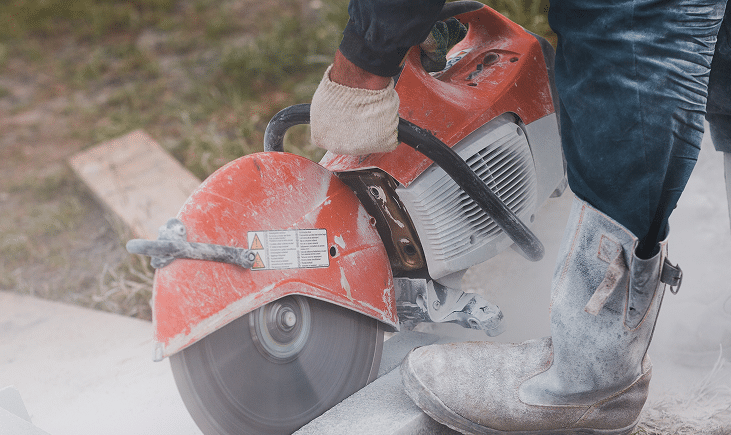
Dry cutting uses a blade built to run without water, usually in short, intermittent cuts so the blade can shed heat. With no water holding the dust down, dry cutting relies completely on extraction.
What a safe dry cut needs
✓ A dry-rated diamond blade
✓ A shroud on the saw to capture dust at the blade
✓ An industrial vacuum rated for silica dust, such as an H-class unit
✓ Bags and filters checked, so suction doesn’t drop mid-job
✓ Short, intermittent cuts so the blade can shed heat
Take the extraction away and dry cutting is just a dust cloud. A full bag or blocked filter quietly cuts suction mid-job. That’s the part a lot of DIY jobs with hire saws and angle grinders get wrong.
What WorkSafe Victoria’s Silica Exposure Standard Means for Your Job
The exposure standard for respirable crystalline silica is 0.05mg/m³, averaged over an eight-hour shift. It’s an enforceable limit, not a guideline. In Victoria, high-risk crystalline silica work also needs a hazard control statement before it starts, setting out the risks and how they’ll be controlled.
In practice, the method has to suit the site, the controls have to run for the whole cut, and respiratory protection may still be needed where some risk remains.
Silica controls, in order
Water and extraction come first. PPE is the backup, not the plan.
If a contractor’s answer to dust is just “we wear masks”, that’s worth questioning.
When Wet Cutting Is the Default
Deep cuts, reinforced slabs, long runs, structural wall openings and anything indoors all point to wet. So do sensitive buildings like schools, hospitals and shopping centres. On a large slab or in an enclosed space, dry cutting isn’t just less efficient. It’s a compliance risk.
| Your job | Method |
| Deep cut or reinforced slab | Wet |
| Long runs or a large slab | Wet |
| Structural wall openings | Wet |
| Indoors or an enclosed space | Wet |
| Schools, hospitals, shopping centres | Wet |
| Single control joint, short driveway section, paver replacement outdoors | Dry with extraction |
| Near live electrics that can’t be isolated | Dry with extraction |
| Over carpet, timber or tile that can’t be protected | Dry with extraction |
When Dry Cutting With Extraction Is the Better Call
Dry cutting earns its place on small, isolated outdoor jobs: a single control joint, a short section of driveway, a paver replacement. There’s no hose to run and no slurry to contain, so setup is quicker, and the job finishes sooner.
It’s also the better option where water is a hazard or would cause damage, which we cover below. The rule stays the same either way: dry means extraction fitted as standard, not as an afterthought.
Why Pre-Wetting a Slab Is Not the Same as Wet Cutting
✗ Myth
Hosing the slab down before cutting controls the dust.
✓ Fact
The dust comes from inside the cut, where surface water never reaches. Water has to flow at the blade the whole time.
The blade is cutting through dry concrete and aggregate below the surface. A damp surface and a dry blade just give you muddy dust.
Wet Blades and Dry Blades Are Not Interchangeable
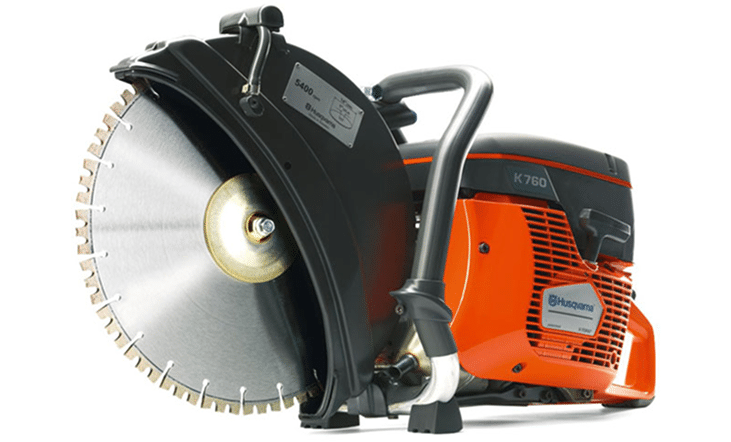
Diamond blades are built for a particular way of working.
| Blade | Used wet | Used dry |
| Wet-rated blade | ✓ As designed | ✗ Segments can overheat and the blade can be damaged |
| Dry-rated blade | Many can, but not every one. Check the marking. | ✓ As designed, with extraction |
The rule is simple: use the blade the way the manufacturer has marked it. It sounds like a small detail. On a circular blade spinning at cutting speed, it isn’t. This is one of the quiet risks with hired equipment, where the blade on the saw may not match the way it’s about to be used. Professional crews match the blade to the method, the concrete and the job before the saw starts.
Slurry Containment and Keeping It Out of Stormwater
Slurry is fine concrete particles mixed with water, and it’s highly alkaline. Melbourne’s stormwater drains run to creeks and the bay without treatment, so slurry must not go down them. EPA Victoria expects it to be contained and disposed of properly.
Cover drains
Stormwater pits are protected before the first cut.
Contain run-off
Slurry is kept to the work area.
Vacuum as you go
Don’t leave it to dry, because dried slurry turns back into dust.
Our crew clears slurry and debris before leaving, so the next trade isn’t working around a mess.
Indoor, Occupied and Live Sites: What Changes
Indoors, dust has nowhere to go, so wet cutting is the default and dry cutting only happens with extraction running. On occupied and trading sites, the planning gets tighter. Timing, no-go zones, containment and where slurry will run are all sorted before the crew arrives.
On the job: Lowther Hall Anglican Grammar School
Lift shaft openings were cut on a live campus with classes running around the work.
Live Electrics and Finished Surfaces
⚠ Live electrics
Water and live electrical installations don’t mix. Working in or near energised services is high-risk construction work and needs a SWMS.
Options: isolate the services before a wet cut, or switch to dry cutting with extraction.
Finished surfaces
Carpet, timber and tile soak up slurry fast.
Options: protect the surface and vacuum slurry right at the blade, or use a dry cut with extraction.
How the Method Affects Cost and Program Time
| Wet cutting | Dry cutting with extraction | |
| Small outdoor job | Water setup and clean-up add time | Can cost less: no water setup, less clean-up |
| Bigger job | Setup pays for itself: cooler blades, cleaner cuts, compliant from the first pass | Less efficient, and a compliance risk indoors or on large slabs |
| Site needs | Water supply. Mains access isn’t guaranteed, so a tank may need planning in. Slurry recovery and disposal. | Extraction unit and maintained filters |
Pricing still comes down to saw type, slab thickness, reinforcement, site access and slurry management.
Frequently Asked Questions About Wet and Dry Cutting
Can you dry cut concrete indoors?+
Only small, isolated cuts with on-tool extraction and the right controls in place. Wet cutting is the default indoors.
Does wet cutting mean no mask is needed?+
Not always. Water is the main control, but respiratory protection may still be required where some risk remains.
Can I hire a saw and dry cut my own driveway?+
You can hire one, but the silica controls still apply. Without extraction and the right blade, a DIY dry cut puts out a lot of dust. Calling a professional cutter is the safer option.
Is wet cutting slower?+
Setup takes longer. The cutting itself isn’t slower, and on long or deep cuts it’s usually more efficient.
Does wetting the slab first count as wet cutting?+
No. The dust comes from inside the cut, so water has to flow at the blade the whole time it’s in the concrete.
Where does the slurry go?+
Not down the stormwater drain. It’s contained, vacuumed up as the cut goes, and cleared before we leave the site.
How We Pick the Method on Your Site
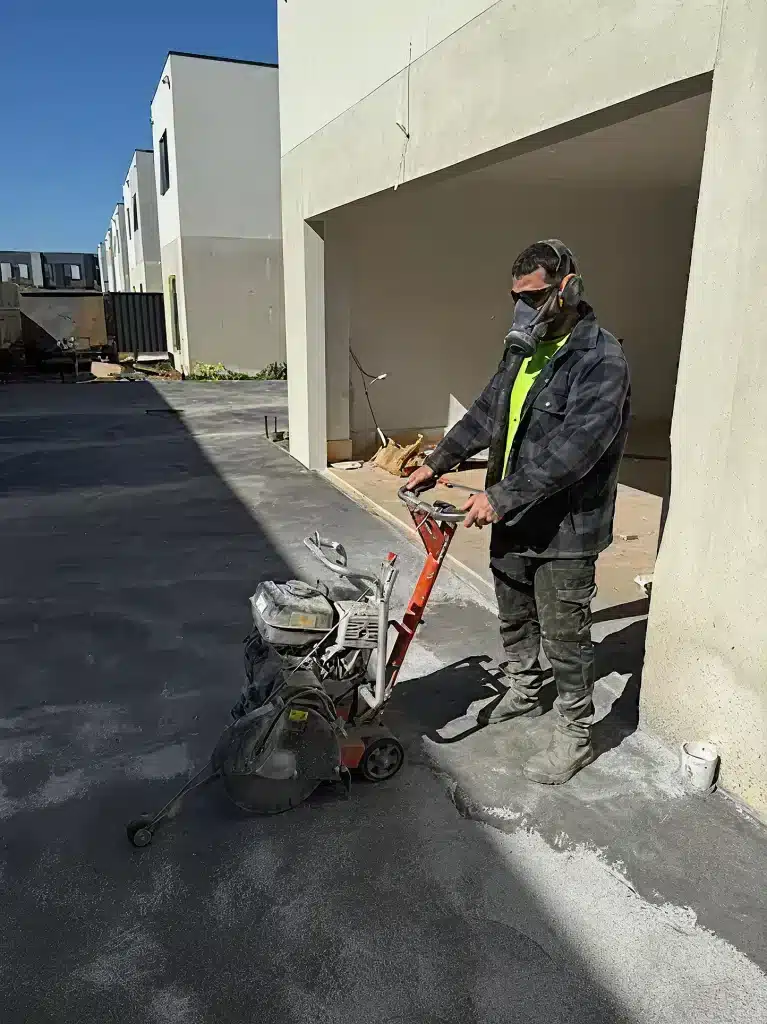
1
Assess the site
We check access, surfaces, electrics, and whether water can be used safely.
2
Set the controls
Water at the blade, or a dry-rated blade with extraction fitted.
3
Clean up and hand back
Slurry and dust cleared, so the next trade starts on time.
Got a cut coming up and not sure whether water is an option? Tell us where it is, what’s around it, and whether the building is occupied. We’ll look at it in person and give you a free quote with the method spelled out, so nothing changes on the day.
Get a free quote with the method spelled out
Over 20 years cutting concrete around Melbourne. Fully licensed, insured and WorkSafe compliant.