


How Deep Can You Cut Concrete
Depth comes down to one thing before anything else: which saw or drill is doing the cutting. A track-mounted floor saw tops out around 200mm. A ring saw stretches that to roughly 300mm in tight spots a floor saw can’t reach. Wire sawing has no real depth ceiling at all, and core drilling isn’t measured in depth so much as matched exactly to whatever pipe or cable needs to pass through the slab. Get the method wrong on a fixed handover date and the whole program feels it, so the crew that quotes the job needs to know which saw fits before the first blade turns.
How Saw Type Determines Maximum Cutting Depth
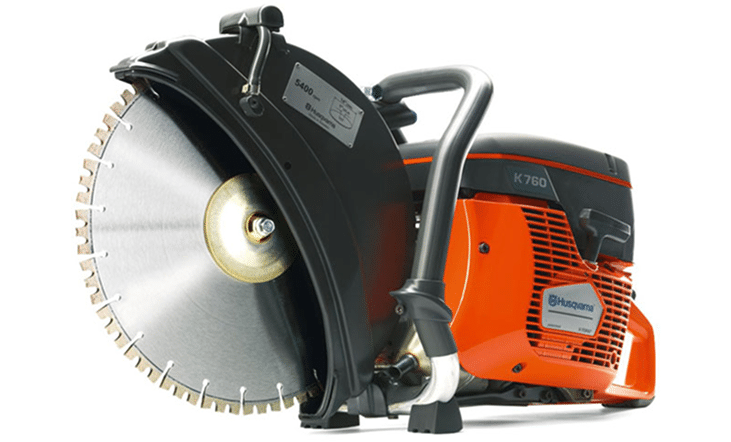 Every concrete cutting method has a ceiling, and no single saw covers the full range from a control joint to a bridge deck. A track-mounted floor saw reaches 150 to 200mm, a ring saw pushes to around 300mm, wire sawing goes as deep as the job needs, and core drilling is set by the diameter and depth of the install rather than a fixed reach. Picking the right one starts with knowing the slab, not with picking the saw already sitting on the truck.
Depth By Method
| Method | Typical Depth | Best Suited To |
|---|---|---|
| Hand Saw | Up to ~150mm | Tight corners, stairwells, confined spaces |
| Ring Saw | Up to ~300mm | Deep cuts near walls or pipes, awkward access |
| Road / Floor Saw | 150-200mm | Driveways, slabs, carriageways |
| Wall Saw | Full wall thickness | Structural openings, doorways, windows |
| Wire Saw | Unlimited | Bridge decks, post-tensioned slabs, mass concrete |
| Core Drilling | Matched to install | Plumbing, electrical, HVAC penetrations |
Hand Saw Depth And Where A Handheld Saw Fits The Job
A hand saw cuts to around 150mm, and that number is not the point. The point is reach: a hand saw gets into a stairwell, a tight corner, or a section of concrete a bigger rig cannot swing into. It is slower by design, and on a job where the margin for error is small, that trade-off is worth it. A track saw leaves a rounded corner where the blade can’t pivot tight enough; a hand saw squares that last stretch off cleanly. Operator control matters more than blade size here, because the saw is following the shape of the space, not the other way around.
Ring Saw Depth For Tight, Awkward, And Confined Spaces
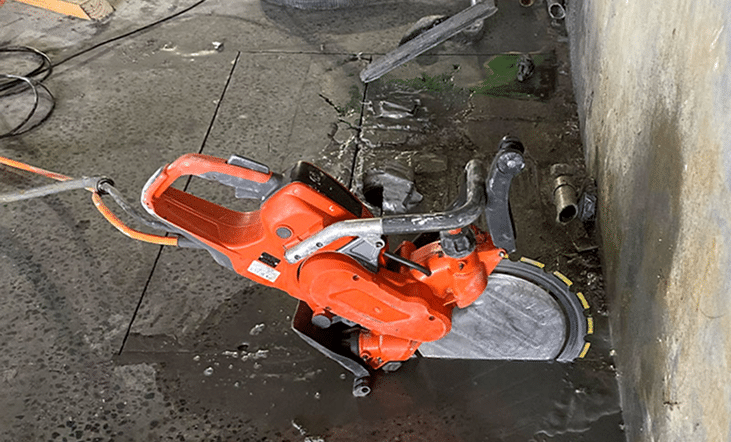
300mm Ceiling
Ring saw cutting reaches around 300mm, and that extra depth over a hand saw is what makes it the answer once access rules out a bigger floor saw. It is built for pipes set into a slab, openings tight to a wall, anywhere depth matters more than swing space. Past 300mm, a ring saw is the wrong tool, and wire sawing takes over. Knowing that ceiling before the job starts saves picking the wrong saw for a deep pipe or duct run and having to bring a second rig back to site.
Road Saw And Floor Saw Depth For Slabs And Driveways
Wall Saw Depth For Structural Openings And Door And Window Cuts
Lowther Hall
Lift shaft openings, wall sawing and core drilling on a live school site.
Karingal Hub
Structural wall openings inside an operational, trading shopping centre.
BYD Kew
Structural wall opening for the showroom fit-out.
Wire Sawing For Cuts Beyond What A Standard Saw Can Reach
Core Drilling Depth For Plumbing, Electrical, And HVAC Runs
Depth Factors
What Decides Depth: Blade Size, Power Source, And Reinforcement
Check The Slab
Thickness, reinforcement, and anything drawings missed are confirmed before any saw is chosen.
Match The Method
Depth, access, and reinforcement set which saw or drill actually does the job.
Cut To Spec
Wet cutting, dust control, and a depth that holds to what was quoted, not a guess.
Structural Risk
Why Cutting Too Big Risks Structural Integrity
A deeper cut is not automatically a better cut. Push a saw or a core past what the structure can carry and the opening risks becoming a repair job rather than a finished one. This is where scanning earns its place: knowing what reinforcement runs through the slab decides whether an opening can go ahead as drawn or needs a different line. A concrete cut cannot be undone. Get it wrong and the whole site loses time, services get hit, slabs crack, and costs climb, which is exactly the risk a scan and a proper depth check are there to prevent.Live Site Compliance
Matching The Method To A Live Or Occupied Melbourne Site
Depth decisions do not happen in isolation on a live, occupied or trading site. A school with students on site or a shopping centre still trading needs dust and noise control built into whichever method gets picked, on top of getting the depth right. Wet cutting and dust extraction keep WorkSafe Victoria’s silica exposure limit of 0.05mg/m3 in check, and that standard does not change because a site is occupied. It just means the crew has less room for a second attempt.Getting An Accurate Depth Estimate Before The Saw Starts
Saw Type
The equipment required for the actual cut.
Slab Thickness
Cut depth affects equipment and cutting time.
Reinforcement
Steel and concrete type influence the cutting method.
Site Access
Working space and access affect how the job is set up.
When To Call A Professional Instead Of Hiring Equipment Yourself
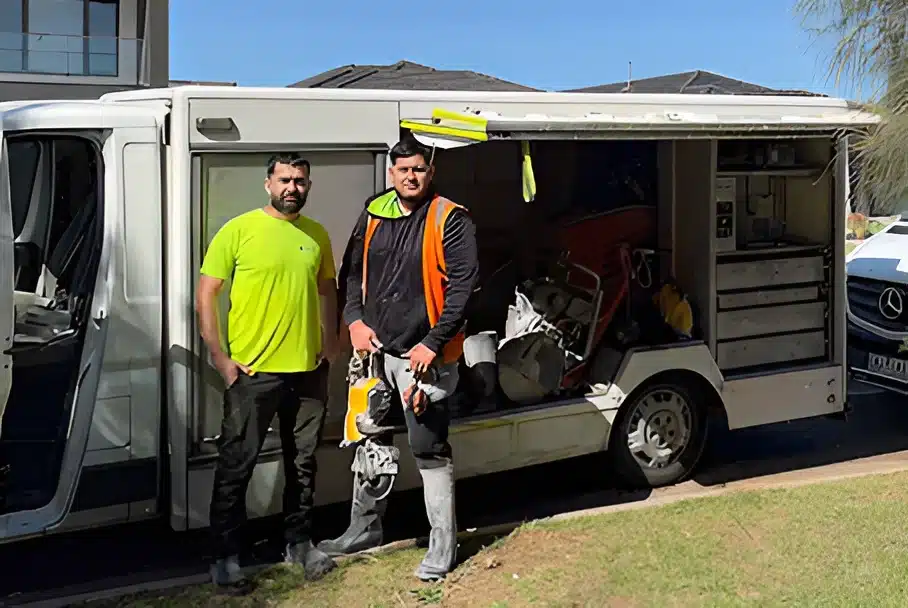
Get It Right First Time
Hiring a saw is easy. Matching that saw to the right depth, reinforcement and access on a live site is where most DIY attempts come unstuck. A professional crew scans before it cuts, carries the right saw for the job rather than the one already on the truck, and runs fully licensed, insured and WorkSafe compliant, backed by 20-plus years and 1,000-plus residential, commercial and industrial projects across Melbourne. That experience is what turns a depth number on a table into a clean cut on site, first time.