


How Long Does Concrete Cutting Take? A Realistic Timeline for Builders and PMs
So, how long does concrete cutting take? A simple cut, like a single line across a driveway, can be done in an hour or two, while structural openings and commercial floors take anywhere from a full day to several days. The saw is usually the quick part. Setup, water, slurry, access and getting the cut concrete out are what fill the time. If your last cutting contractor fell behind and you’re trying to put a real number in the program, this is how to work it out.
The Short Answer
Five things set the timeline
- What’s being cut. A driveway line, a trench, a wall opening or a commercial floor.
- How thick it is. Thickness sets the saw and the number of passes.
- How much steel is inside. Reinforcement slows the blade and wears it faster.
- How easy the access is. Driving onto a slab is quick. Carrying gear up stairs isn’t.
- What happens to the concrete after. Removal can take as long as the cut.
1 to 2 hrs
Typical time on site for a single driveway or path cut
4 to 12 hrs
Typical window after a pour for cutting control joints
7am to 6pm
EPA Victoria’s normal weekday construction hours
~500m
Floor sawing at Speedy Way, with 400mm deep removal, planned over days
How Long Concrete Cutting Takes: The Short Answer

As a rough guide only, here’s how jobs usually fall. These ranges include setup and clean-up, but every site is different.
| Job Size | What It Usually Looks Like | Rough Time on Site |
|---|---|---|
| Small | A single driveway or path cut, a short drainage trench | An hour or two |
| Medium | A slab trench inside a house for plumbing, a wall opening in a renovation | Half a day to a full day |
| Large | Commercial floors, thick reinforced slabs, several structural openings | A full day to several days |
Where each job size usually lands
Rough guide only, including setup and clean-up
| 1 to 2 hours | Half day | Full day | Several days | |
|---|---|---|---|---|
| Small | Typical | |||
| Medium | Typical | |||
| Large | Typical | |||
The number that belongs in your program is the one that comes from a site assessment.
Small Jobs: Driveways, Paths and Single Cuts
Straight cuts outdoors on open ground are about as quick as this work gets. A track-mounted floor saw runs the line, the water’s easy to manage, and the crew can drive straight up to it.
Control joints in a new slab are similar, as long as the timing’s right. They typically need cutting four to twelve hours after the pour, depending on the mix and the weather, and cold Melbourne mornings push that window out.
The control joint window
Hours after the pour, typical range
Too early
The edges ravel.
Too late
The slab cracks on a line of its own choosing.
On control joints, that timing matters more than the cutting itself.
Medium Jobs: Internal Slabs, Trenches and Wall Openings
Move the same cut indoors, and it takes longer. Floors and finishes need protecting, slurry has to be contained, and dust control has to be set up properly before the blade goes in.
A plumbing trench through a garage or bathroom slab, or a new doorway in a renovation, usually sits somewhere in the half-day to full-day range. Here’s how a typical half-day inside runs. The cut itself might only be a small slice of it.
Wall openings run longer than floor cuts because the wall saw’s track has to be fixed to the wall first. Tight spots like stairwells go to a hand saw, which is precise but slower.
Renovating? Send the full list up front.
Renovations often turn into a few visits rather than one: a window opening one week, a drainage trench the next. If you know the full list early, it can sometimes be grouped into fewer trips.
Large Jobs: Commercial Floors, Thick Slabs and Structural Openings
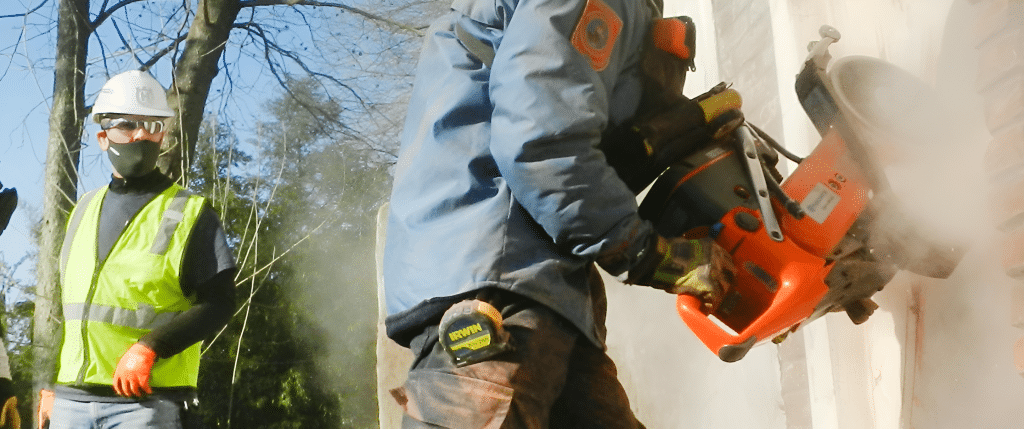
Commercial work adds up quickly. More steel, thicker concrete, bigger openings and other trades working around you all stretch the timeline.
Case Study: Speedy Way
Industrial floor sawing and removal
400mm
Removal depth
~500m
Floor sawing
Days
Planned around the site
Work at that scale gets planned over days and fitted around the rest of the site. Road and carriageway cutting on civil jobs also needs traffic management sorted before anyone starts, or the job stalls before the blade turns.
What Slows a Concrete Cutting Job Down
On most jobs, the same few things stretch the day:
Reinforcement
Slows the blade and wears it faster
Thickness
Sets the saw and the number of passes
Tight access
Basements, stairwells and plant rooms
Water and slurry
Supply, containment and clean-up
Noise limits
Site hours, councils and building management
Removal
Getting the cut concrete out
Almost all of that can be spotted on a site walk before the job is booked. That’s the main reason a site-assessed time is more reliable than a phone estimate.
Setup, Wet Cutting and Slurry Clean-Up Time
Wet cutting is standard on any real-scale job. It keeps silica dust under WorkSafe Victoria’s limits and stops the blade overheating. The water has to be set up first, and the slurry it creates has to be collected and cleared afterwards.
Outside on a driveway
- Water runs off easily
- Slurry is simple to collect
- Setup and clean-up are quick
Inside a commercial building
- Finished surfaces need protecting
- Slurry has to be captured at the cut
- Takes longer and can’t be rushed
Dry cutting only suits small, isolated cuts, so it isn’t a shortcut on a full floor. Our guide to wet vs dry concrete cutting explains when each one works.
How Reinforcement and Slab Thickness Change the Timeline
A track-mounted floor saw typically cuts 150 to 200mm deep, and a ring saw reaches around 300mm where a floor saw can’t get access. Go thicker, and you need a different saw or more passes.
Typical cutting depth by saw
Millimetres, scaled to a 300mm reference
Track-mounted floor saw
Ring saw
Steel slows things down further. A domestic slab with light mesh cuts much faster than a commercial floor with heavy bar, even at the same depth. The right blade helps, but steel is always slower than plain concrete.
Don’t guess the thickness
The drawings are a starting point, and the site walk confirms it. Guessing the thickness is one of the quickest ways to book the wrong saw, and booking the wrong saw is one of the quickest ways a job runs late.
For more on depth limits, see how deep a concrete saw can cut.
Access, Noise Restrictions and Working Hours in Melbourne
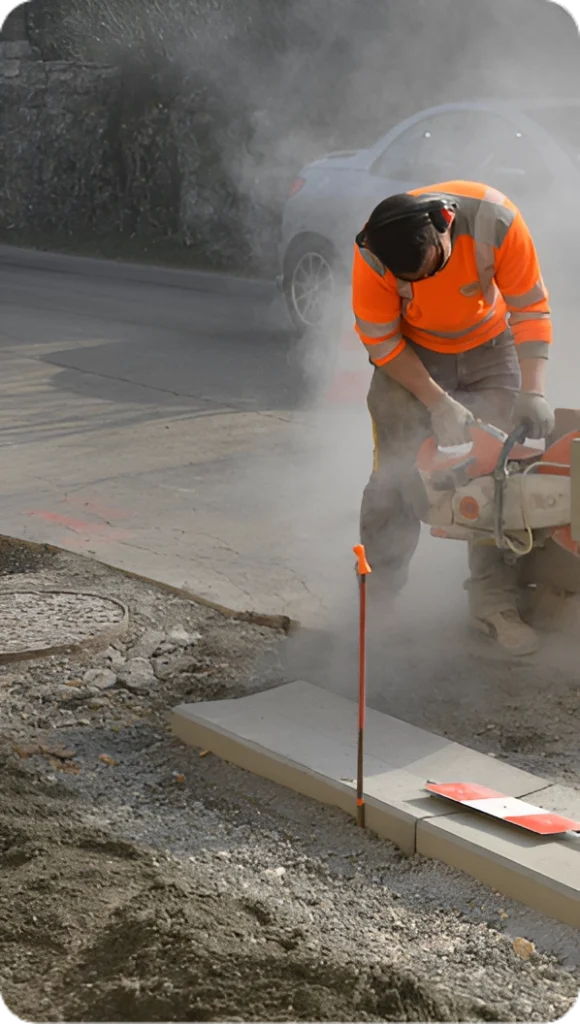
A saw that drives straight onto a slab is quick. One that has to be carried up stairs or set up in a basement next to live services isn’t.
Noise is the other one. Concrete saws are loud, so cutting near homes, schools and trading centres often has to fit set hours. EPA Victoria’s guidance sets these normal working hours for construction:
| Type of Work | Weekdays | Saturday |
|---|---|---|
| Residential construction and demolition | 7am to 6pm | 9am to 1pm |
| Commercial or industrial construction and demolition | 7am to 6pm | 7am to 1pm |
| Large-scale residential in non-residential zones | 7am to 6pm | 7am to 1pm |
Source: EPA Victoria, Construction noise. Councils handle residential construction noise and can set their own requirements, so check local rules and building management requirements early so the work isn’t booked into a window it can’t use.
On occupied sites, the windows can be tight. School holidays, after-hours slots and quiet trading periods are often when the noisy work has to happen. At Lowther Hall and Karingal Hub, cutting had to fit around a working school and a trading shopping centre, and that kind of job is planned around the building’s timetable as much as the cutting.
Cutting Time Versus Removal Time
People plan the cut and forget what happens next. Getting heavy sections of concrete out can take as long as cutting them, sometimes longer, especially indoors or up a level.
Cut Only
The saw runs the lines and the slurry gets cleared. Someone else deals with the concrete.
Cut and Remove
Changes the crew, the gear and the time. Sections get sized to what can be lifted and carried out, which can mean more cuts than you’d expect.
If the job is cut and remove, say so when you ask for the quote. See our concrete removal service for more.
Booking Lead Times and Sequencing With Other Trades
Cutting usually sits between trades. If cutting slips, everyone behind it slips.
Same-day work is sometimes possible, depending on the schedule and the job, but it’s safer to book early. Arrival times and access get confirmed beforehand so a tight program doesn’t stall waiting on the cutting crew.
Getting a Time You Can Actually Rely On
1
Tell Us the Job
What’s being cut, how thick, how long, and how you get to it.
2
We Check the Site
Steel, access and removal are looked at before the quote goes out.
3
Lock It In
Arrival time and access are confirmed so the program holds.
How to Keep Concrete Cutting From Stalling Your Program
Most delays come from things nobody checked. Run through this before you lock the date:
Program checklist
- Cutting contractor has looked at the site
- Access path is clear
- Water and power are sorted
- Services are identified before cutting starts
- Neighbours, tenants or building managers have had a heads-up
- Someone on site can confirm cut lines on the day
That last one matters more than people expect. If a line needs checking and nobody can answer, the saw sits idle. Do all of that, and cutting tends to be one of the more predictable parts of a build.
What to Send Through for an Accurate Time Estimate
The more you send, the better the estimate:
- The site address
- What’s being cut and the rough thickness
- The length of cut or number of openings
- The access from the street
- Whether the concrete needs taking away
- A couple of photos of the slab or wall and the access path
Concrete Cutting Timeline FAQs
How long does it take to cut a concrete driveway?
How long does a doorway or wall opening take?
Why does indoor cutting take longer than outdoor cutting?
Floors and finishes need protecting, slurry has to be contained rather than left to run off, and dust control has to be set up before the blade goes in. The cut itself is often a small part of the