


A concrete cut cannot be undone, so knowing how to cut concrete properly, or knowing when to stop work and call someone who does concrete cutting projects every day, is worth more than any tool or equipment in the shed. Melbourne Site Manager Mike does not need convincing that a botched concrete cut costs more than the invoice; he has seen a program slip because a subcontractor rushed a cut during the project and hit a service nobody scanned for first.
Tools You Need To Cut Concrete
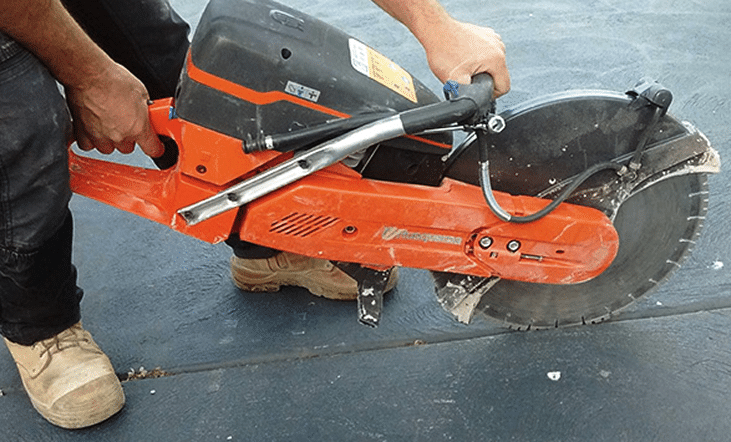
For small, shallow cuts, a 7 1/4-inch circular saw fitted with a diamond blade handles depths up to around 2.5 inches in a single pass. An angle grinder with a blade suits smaller, more detailed cuts, though it is slower and less precise over a straight line than a circular saw. Beyond that, a wet saw, a core rig, and proper dust extraction move the project from a weekend task into commercial-grade equipment territory.
- Diamond blade (never an abrasive blade; they wear out fast and can bind)
- Circular saw or angle grinder for shallow, small-scale cuts
- Chalk line and straight edge for marking
- Water feed or dust extraction attachment
- P2 or N95 respirator, eye protection, hearing protection
Circular Saw
Suited to shorter straight cuts, pavers, blocks and thinner slabs.
Angle Grinder
Better suited to corners, small openings and areas a larger saw cannot reach.
Wet Saw & Core Rig
Commercial-grade equipment for thicker concrete, deeper cuts and larger work.
Not every job needs the same kit bought outright. For a single project, hire beats owning, and most hire yards will supply the saws along with water feed and extraction gear as part of the safety setup. Concrete cuts differently depending on age and reinforcement, so the best move is a test cut on scrap before you commit; it’s the best way to avoid ruining a slab.
Circular saws make short work of shallow lines, but bigger projects with thick concrete need saws rated for genuine depth, exactly what you need before a structural cut. Safety stays essential either way, since a blocked respirator causes the same harm on a small project as it does on serious work. Keep equipment clean between projects, because built-up dust slows the work and wears gear down faster. Match the equipment to the project ahead, and you’ll make the right call on whether to hire or own, on this job and the projects that follow.
Marking And Preparing Your Cut Line
Mark the cut line with a chalk line and check it against anything that might sit beneath the surface: pipes, conduit, or reinforcing mesh. On a driveway or path, that check matters more than it looks like it should, because a cut that hits a buried service turns a simple concrete cutting job into an expensive one fast.
Photograph the marked line before the saws touch anything, since concrete can hide pipes, conduit, or old service runs beneath it. The best equipment means little without someone who can read what a scan actually shows, and on trickier projects it’s worth the hire of a second set of eyes rather than trusting one pass alone.
Safety sign-off belongs at this stage too, before the saws are running, not after. A five-minute pause can make the difference between a clean concrete cutting job and a costly rework, and it protects the equipment on site as much as the crew. Concrete rarely gives second chances once a line is committed to, so give marking the same weight on small jobs and bigger projects alike. The best crews make this check routine on every one of the concrete cutting projects they run, keep the equipment maintained, and safety stays intact without needing a hire truck to sort out a mistake afterward.
Cutting Concrete With A Circular Saw
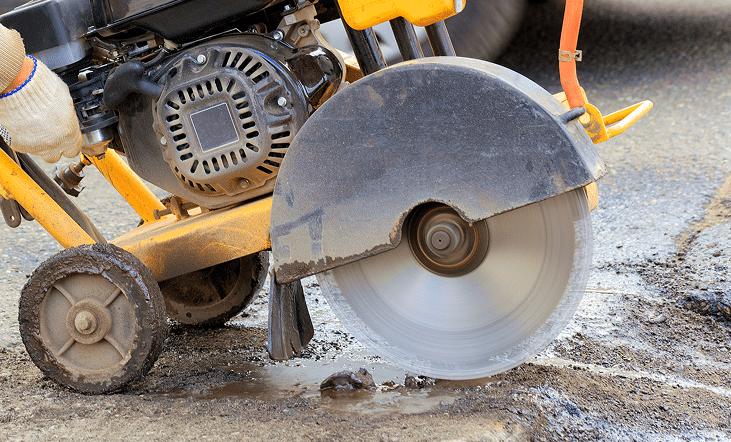
A circular saw with a diamond blade is one of the most common ways to cut concrete for both small and larger pieces, blocks, pavers, and thinner concrete slabs. For a slab, cut the first inch or so down, then finish with a sledgehammer along the scored line rather than trying to push the saw through the full depth in one pass. Step-cutting in shallow passes, roughly half an inch at a time, keeps the blade cool and the line straight.
Wet the line if dust builds up, since dry work throws fine concrete particles further than the noise suggests it will. Older concrete often hides old patch repairs beneath a fresh-looking surface, so watch the colour and texture of the dust coming off the blade; a sudden change usually means you’ve hit something different underneath. Before reaching for the sledgehammer, run a finger along the score to check it’s even along the full length; an uneven concrete line breaks unpredictably rather than along the path you scored.
Cutting Concrete With An Angle Grinder
An angle grinder fitted with a diamond blade cuts through concrete and masonry, though it runs slower and less straight than a circular saw. It suits detail work, corners, small openings, spots a bigger saw cannot reach, more than it suits a long straight cut.
Wet Cutting Versus Dry Cutting At Home
| Method | Best For | Watch Out For |
|---|---|---|
| Wet cutting | Any real-scale cut, indoor or sensitive areas | Slurry management and clean-up |
| Dry cutting | Small, isolated outdoor cuts | Dust; always pair with a respirator and extraction |
Dry cutting works for small isolated cuts. Wet cutting is the standard for anything more than that, because the water cools the blade and binds the concrete dust so it does not become airborne.
Safety Gear And Silica Dust Risks
WorkSafe Victoria’s silica exposure limit sits at 0.05mg per cubic metre, and cutting concrete without water suppression or dust extraction on a real job breaches that threshold fast. A P2 or N95 respirator is the minimum, on top of eye and hearing protection, every time a blade goes into concrete.
Hearing loss builds the same way as dust exposure, in increments too small to notice on any single day. A saw working near a wall or in a tight space can push noise well past safe levels, so ear protection deserves the same routine attention as a respirator, not something grabbed only on the louder jobs.
Track exposure across a working life, not just one site. Anyone cutting concrete regularly should assume the risk from concrete dust adds up rather than resets between jobs, and rotating tasks between crew members keeps the heaviest exposure from landing on the same person every time a concrete job comes through.
Cutting Reinforced Concrete Safely
Reinforced concrete carries steel mesh or bar, and cutting through it needs a blade rated for it, plus a slower, more deliberate approach than an unreinforced slab. Older slabs, particularly anything poured between the late 1970s and mid-1990s, can also carry post-tensioned cables under load, which is a different risk category entirely and not something to guess at with a DIY blade.
Common Mistakes When Cutting Concrete Yourself
- Using an abrasive blade, which wears fast and can force the saw off line.
- Skipping the dust suppression step, whether water or extraction.
- Not checking what is beneath the surface before marking the cut.
- Trying to cut full depth in one pass instead of stepping down gradually.
- Ignoring reinforcement and pushing through steel with the wrong equipment.
When A DIY Cut Becomes A Structural Risk
Anything beyond about six inches thick, anything load-bearing, or anything on a slab poured before the mid-1990s where post-tensioned cables might be present, moves out of DIY territory. A wrong cut in a post-tensioned slab is not a repair job; it is a structural incident.
When To Call A Professional Concrete Cutter
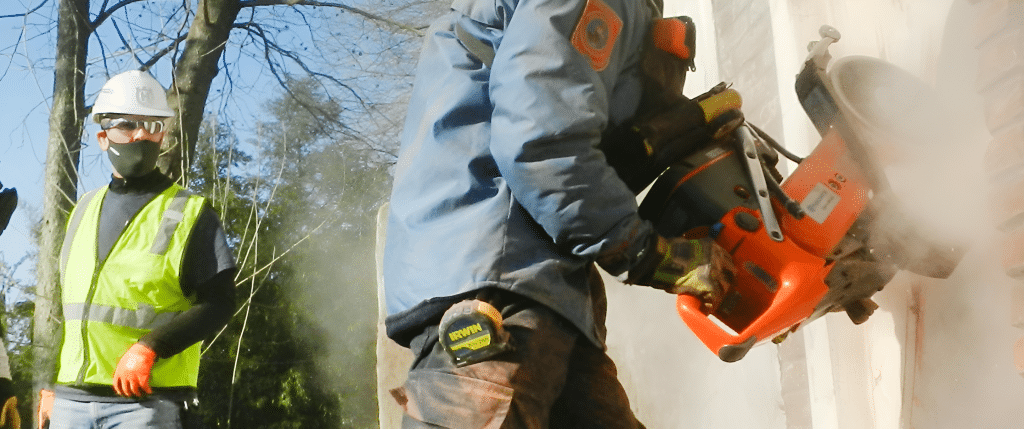
A drainage trench or a small paver cut is a reasonable weekend project. A structural wall opening, a commercial floor cut, anything on a live or occupied site, or anything where a service might be hidden in the slab, is where a professional concrete cutter earns their fee: non-destructive scanning before the cut, industry-grade diamond equipment, and full public liability cover if something does not go to plan.
What A Professional Concrete Cutting Quote Includes
A proper quote covers saw type, slab thickness, reinforcement and site access, priced against the actual job rather than a placeholder figure. It should also include scanning where relevant, wet cutting for dust control, and clean-up before the crew leaves.
Saw Type
Equipment matched to the actual cut.
Slab & Reinforcement
Thickness and what’s inside the concrete.
Site Access
Working space, access and job conditions.
Cutting & Clean-Up
Scanning where relevant, dust control and handover.
Concrete Cutting FAQs
How deep can you cut concrete?
A track-mounted floor saw typically reaches 150- 200 mm, ring saws push to around 300mm, wire sawing handles anything deeper, and diamond core rigs go as deep as the hole requires.
Can you cut concrete without water?
Dry cutting works on small isolated cuts, but wet cutting is standard on any real-scale job to control silica dust.
Do you offer same-day or emergency concrete cutting?
It depends on the schedule and the job; call with the site details for a straight answer on timing.
Ready To Book A Concrete Cutting Job?
Ready to book a job rather than DIY it? Send through the site details and get back a real quote for concrete cutting across Melbourne.