


Core Drilling Cost Melbourne
A standard residential core drilling penetration in Melbourne typically runs $150 to $350, while commercial work is priced on diameter, depth, slab type and access rather than a flat rate. A domestic core through a 150mm slab usually takes under an hour once the rig is positioned, and most Melbourne jobs wrap within a half-day. Core drilling and coring mean cutting an accurate, round hole through concrete, brick or masonry with a diamond-tipped, water-cooled core bit, most often for a pipe, a conduit or a service run that has to pass straight through a slab or wall.
What Does Core Drilling Cost In Melbourne
Cost Per Hole By Diameter And Depth
| Detail | Range |
|---|---|
| Hole diameter | 25mm to 750mm |
| Standard single-pass depth | 300mm to 400mm |
| Extended depth | Achievable with barrel extensions |
| Standard residential penetration | $150 to $350 |
What Drives Core Drilling Pricing Up
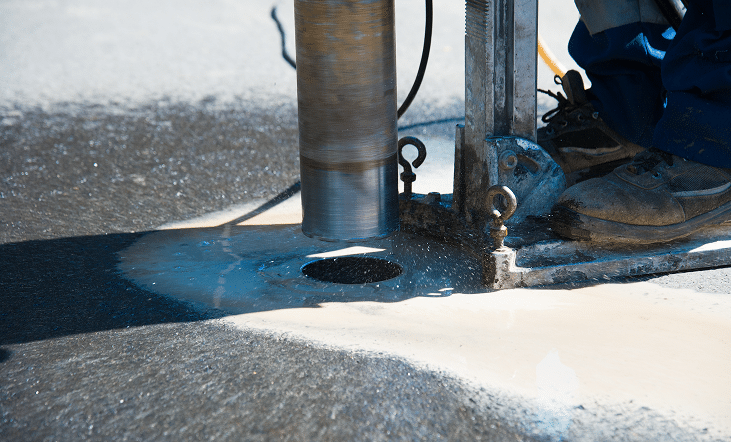 Diameter and depth are the starting point, but several other factors move a core drilling quote.
Reinforcement
Rebar and mesh add time and blade wear.
Slab Type And Thickness
A 300mm commercial floor costs more to core than a 100mm domestic slab.
Access
Plant rooms, basements and overhead angles all add complexity.
Water And Slurry Management
Larger holes need higher-flow cooling water and more containment.
Hand-Held Rigs Vs Bolt-Down And Vacuum Rigs
Plant rooms, basement walls and overhead angles don’t always give a rig room to set up. Hand-held core drilling covers that tight access, holding position and precision without needing the footprint a larger rig demands, and it’s generally the more cost-effective option for small to mid-size holes in confined spaces.
Bolt-down and vacuum-mounted rigs come into play for larger diameter holes, structural penetrations, and jobs where the drill needs to hold a fixed position under load for longer. Hydraulic core drilling delivers the stability a hand-held drill can’t manage cleanly on holes above around 300mm. A core plug through thick concrete at that size can weigh over 50kg, so lifting gear and a clear drop zone get planned before the rig even starts.
Core Drilling For Plumbing, Electrical, And HVAC
Daily Bread Of The Trade
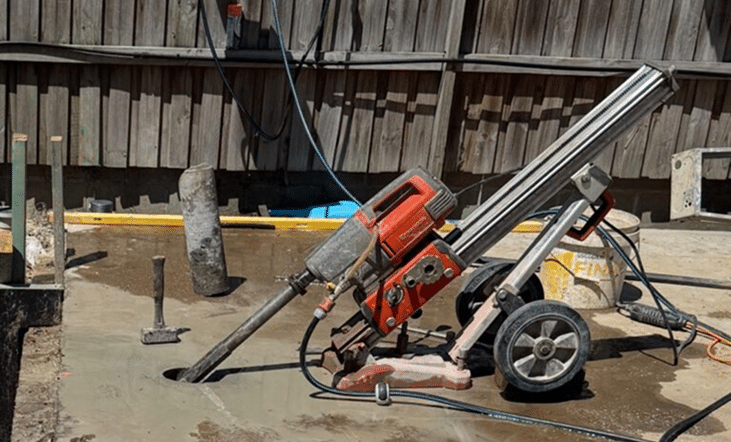
Core holes for plumbing, electrical, and HVAC runs are the daily bread of this trade. A drain riser, a network cable, and a return-air duct rarely want the same size hole, and wider commercial runs often need ring cutting first to open access. Scanning before drilling is standard practice, not an upsell, because the diameter and depth have to match the install exactly or it doesn’t fit.
Scan First
Why What Is Behind The Slab Matters Before Drilling
Core drilling in Melbourne starts with knowing what’s behind the slab: reinforcement, conduit, and sometimes a live cable. Miss it, and a clean cut becomes a repair, and a repair almost always costs more than the scan that would have caught it in the first place. A slab’s finish or age tells a crew nothing about what’s cast inside the concrete; only a ground-penetrating radar sweep does.Reinforcement, Services, And Scanning Before A Hole Goes In
Site Scan
Check for cables, conduit and embedded services first.
Rig Setup
Hand-held or hydraulic, matched to hole size and access.
Drill & Sign-Off
Wet drilling, slurry cleared, hole signed off ready.
Core Drilling On Occupied Or Trading Commercial Sites
Same Day Core Drilling And Turnaround Times
Fast Turnaround
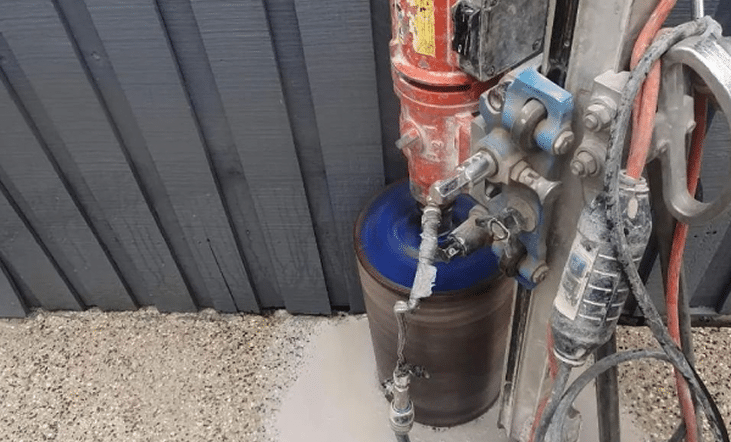
A drain needing a core hole before an inspection, or a service that has to go in before the next trade arrives, both come up regularly on Melbourne builds. Same-day quotes and confirmed arrival times mean other trades aren’t left waiting on a decision that could have been made that morning. Fire service penetrations under AS 1851 add their own timing pressure, since a building certifier walking a fire inspection wants to see the penetration before the ceiling closes over it.
Slurry Control And Clean Handover On Every Hole
Which One You Need
Core Drilling Versus Concrete Cutting, Which One You Need
| Core Drilling | Concrete Cutting (Sawing) |
|---|---|
| Round, service-sized penetrations | Straight lines and openings |
| Plumbing, electrical, HVAC runs | Doorways, windows, lift shafts |
| 25mm to 750mm diameter | Larger structural work |
| Best for a single service pass-through | Best for demolition and removal prep |