


Concrete Sawing vs Core Drilling: Which One Does Your Job Need?
The short answer
Concrete sawing cuts straight lines for openings, trenches and joints. Core drilling bores clean round holes for pipes, conduit and ducts. The shape coming out of the concrete decides which one your job needs.
Booking the wrong method is one of the most common reasons a cutting crew turns up with the wrong saw, stands around, and stalls the whole program. When you’re running three sites and the plumber is booked in for tomorrow, that’s a day you don’t get back.
20+
Years cutting concrete across Melbourne
1,000+
Residential, commercial and industrial projects
2 in 1
Saw and core rig on the same visit when a job needs both
Concrete Sawing vs Core Drilling at a Glance
Here’s the side-by-side most site managers want before they book anything.
| Concrete sawing | Core drilling | |
| What comes out | Straight lines, rectangles, slab sections | A solid round plug, leaving a clean hole |
| Cutting tool | Diamond blade on a road, wall, hand or ring saw | Hollow steel bit with diamond segments on a core rig |
| Typical jobs | Doorways, windows, lift shafts, trenches, control joints, removal | Plumbing, electrical, HVAC and drainage penetrations |
| Depth guide | Floor saw 150 to 200mm, ring saw around 300mm | As deep as the hole requires |
| How it’s measured | Length and depth of cut | Number of holes, diameter and depth |
| Noise and vibration | Louder, timed around the site | Quieter, less vibration |
| Dust control | Wet cutting and extraction | Wet drilling and extraction |
| Can be combined? | Yes. Square openings often get cored corners first, then sawn edges. | |
What Concrete Sawing Does That a Core Drill Can’t
Sawing runs a diamond blade along a marked line. That line might become a doorway, a drainage trench, a control joint in a new floor, or a whole section of slab coming out for concrete removal. A core drill only makes circles. If you need a rectangle, a long straight cut, or a slab lifted out in pieces, you need a saw.
- Openings: doorways, windows and lift shafts in walls
- Trenches: long parallel cuts for drainage and services
- Joints: control joints and expansion lines in new slabs
- Removal: slab sections cut into liftable pieces
Sawing also covers distance in a way coring never will.
On the job: Speedy Way, industrial
Our team handled a deep concrete removal using floor sawing across a large industrial area.
400mm
Removal depth
~500m
Of floor sawing
What Core Drilling Does That a Saw Can’t
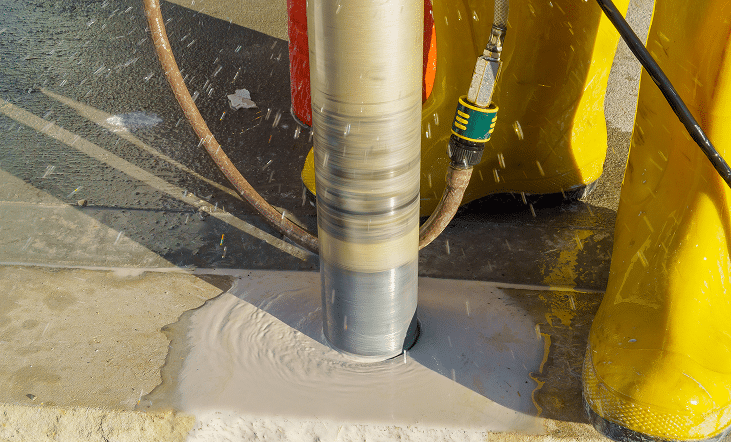
A core bit is a hollow steel tube with diamond segments on the cutting edge. It cuts around the concrete instead of smashing through it, and a solid plug comes out. What’s left is a clean, precise round hole with no cracking around the edge.
That’s exactly what plumbers, electricians and HVAC installers need for a penetration. A saw can’t make a neat round hole, so you’d end up patching around the pipe. See our core drilling and coring service for more detail.
Straight Lines or Round Holes: The First Question to Ask
Before saw type, depth or price comes into it, ask one thing: what shape is coming out? Then two more questions finish the brief.
1
What shape?
Round hole means core drilling. Straight line or rectangle means sawing. Square opening often means both.
2
How deep?
Slab or wall thickness decides the saw. A floor saw, a ring saw and a core rig all reach different depths.
3
What’s inside?
Rebar, mesh, conduit, live cable or post-tensioned tendons all change the approach.
Here’s how the first question plays out on most jobs we see across Melbourne, VIC.
| What the job needs | Best method | Why |
| Pipe, conduit or duct penetration | Core drilling | Round hole sized to the install |
| Doorway, window or lift shaft opening | Wall sawing | Straight edges, panel comes out whole |
| Drainage trench in a slab | Floor or road sawing | Long, parallel straight cuts |
| Control joints in a new pour | Floor sawing | Usually cut 4 to 12 hours after the pour, depending on the mix and temperature |
| Pipe set into a slab, tight access | Ring sawing | Reaches around 300mm where a floor saw can’t get in |
| Big opening with square corners | Sawing plus coring | Cores finish the corners cleanly |
The Saws Behind Concrete Sawing: Road, Wall, Hand and Ring Saws
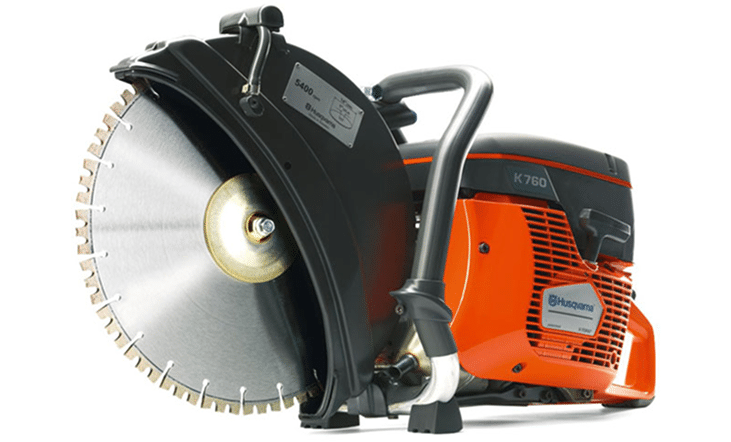
“Concrete sawing” covers four different machines. Each one suits a different kind of access.
Driveways, slabs and full carriageways, cutting concrete, asphalt and bitumen to depth. On a road job, the traffic management plan comes first. Skip it, and the job stalls before the blade even starts.
Run on a track bolted to the wall, keeping the blade steady for doorways, windows and lift shaft openings in concrete or brick.
Get into tight corners, stairwells and confined spaces a bigger rig can’t reach.
Reach around 300mm on deep, awkward cuts, like pipes set into a slab or tight openings near a wall.
Typical Core Drilling Jobs on Melbourne Sites
Most core drilling across the city comes down to services:
- A waste pipe through a suspended slab
- Electrical conduit through a basement wall
- Ducting for a new HVAC run
- A drain that has to be cored before an inspection
What matters on every one is that the diameter and depth match the install exactly. Get it wrong, and it’s a refit and a patch. Our diamond core rigs go as deep as the hole needs, and the size gets confirmed before booking so the right bit is on the truck.
How Slab Thickness and Reinforcement Change the Choice
Thickness changes the equipment. The chart below shows the typical reach of each saw.
Typical cutting depth by saw type
Scale: 0 to 300mm. Actual depth depends on blade size, access and the slab.
Track-mounted floor saw
Ring saw
Diamond core rig
Anything much deeper than a ring saw can reach, like mass concrete or bridge work, moves into wire sawing, which is specialist civil territory.
Reinforcement changes the pace. When the blade or bit hits rebar, the feed rate drops. Push too hard, and the diamond segments glaze over and stop cutting. Wet cutting matters here, because the water cools the segments and flushes steel filings out of the cut.
⚠ Post-tensioned slabs
Those cables are under serious load, and cutting one isn’t something you can fix on site. Every PT slab job starts with scanning to locate the cables and an engineer’s sign-off on where the cut or core can go.
When One Job Needs Both: Sawn Openings With Cored Corners
This is where the “versus” stops making sense. A circular blade can’t cut a square internal corner without running past it. On a structural opening where overcuts aren’t allowed, the corners get cored first, then the saw cuts between them. You end up with a square, precise opening and no overcut tails.
STEP 1
Core the corners
A core hole goes in at each corner of the marked opening.
STEP 2
Saw between them
The wall saw runs corner to corner without passing the line.
STEP 3
Panel out, clean edges
A square opening with no overcut tails for the engineer to reject.
It works the other way too.
On the job: Lowther Hall Anglican Grammar School
The lift shaft openings needed wall sawing and core drilling on a live school campus. Booking both on one visit kept the program moving and cut out separate call-outs.
Noise, Vibration and Dust on Occupied or Trading Sites
Core drilling is the quieter of the two, with less vibration, which makes it easier to run near classrooms, shops or offices. Sawing is louder, so it gets timed around the site, not the other way round.
| On a live site | Sawing | Core drilling |
| Noise | Higher | Lower |
| Vibration | Higher | Lower |
| Scheduling | Timed around site activity | Easier to run near occupied rooms |
| Dust and slurry | Wet cutting, dust extraction and slurry vacuumed up for both | |
Dust is the bigger risk.
0.05mg/m³
Respirable crystalline silica, 8-hour average
That’s WorkSafe Victoria’s exposure standard. Wet cutting and dust extraction keep both methods inside that limit. Slurry gets vacuumed up, kept out of stormwater, and cleared before we leave, so the next trade isn’t held up.
Control Joints: The Sawing Job With a Clock on It
Control joints are one sawing job where timing matters as much as depth. They let a slab crack on a line you choose, not one it finds on its own. The cutting window typically falls between four and twelve hours after the pour, depending on the mix design and site temperature.
| 0 | 1 | 2 | 3 | 4 | 5 | 6 | 7 | 8 | 9 | 10 | 11 | 12 | 12+ |
Hours after the pour. Red marks the typical cutting window. Grey is usually too early. Past the window, the slab can find its own line.
Winter needs more patience. Cold slows cure rates, and cutting too early creates drag and rough edges the joint wasn’t designed to carry. More on our control joints and expansion lines page.
Why Sawing and Coring Are Priced Differently
They’re measured differently, so they cost differently.
Sawing is priced on
- Length of the cut
- Depth of the cut
Coring is priced on
- Number of holes
- Hole diameter
- Hole depth
Both shift with
- Slab thickness
- Reinforcement
- Site access
- Slurry management
A small domestic core hole for a plumber and a commercial cut through a 300mm reinforced floor aren’t priced anywhere near each other. That’s why we walk the site first and give you a free, real quote, not a placeholder figure that moves on the day.
Checking What’s Behind the Slab Before Either Method Starts
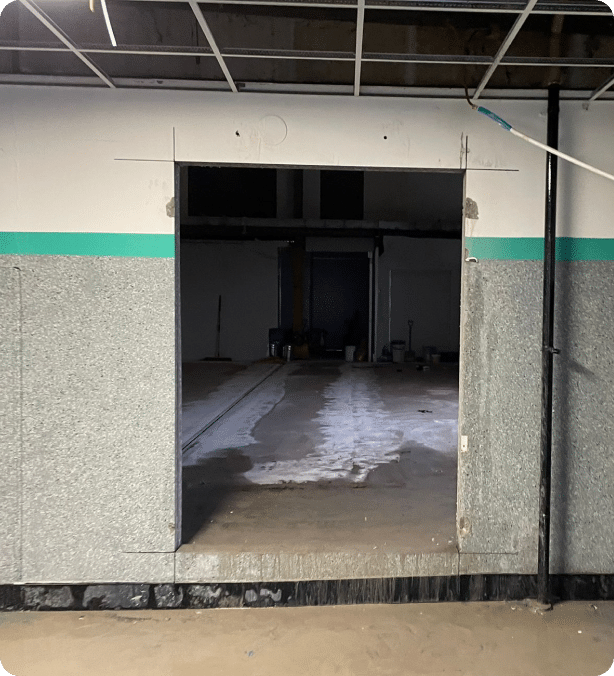
Older Melbourne buildings hide things. Pipes, cables and vents sit behind walls and inside slabs with nothing marked on the plans. Hit a live cable, and you don’t just lose time; you can knock out power to a whole floor.
So the checking happens before the blade or bit goes in:
- Drawings get compared with what’s actually on site
- Scanning is arranged where the job calls for it
- The cut line or hole position shifts if something’s in the way
Common Mistakes When the Wrong Method Gets Booked
| The mistake | What happens | The fix |
| ✗ Booking “concrete cutting” for a pipe penetration | A saw crew turns up instead of a core rig | ✓ Say “round hole” and give the diameter |
| ✗ Booking a floor saw for a deep cut | The blade can’t reach the full depth | ✓ Give the slab or wall thickness |
| ✗ Forgetting the corners on a wall opening | Overcuts the engineer won’t accept | ✓ Ask for cored corners where overcuts aren’t allowed |
All three come down to the same thing. The brief didn’t say what shape, how deep, and what’s in the concrete. Give your contractor those three facts and the right equipment turns up.
Frequently Asked Questions About Sawing and Core Drilling
Can you core drill through reinforced concrete?+
Yes. Diamond core bits cut through rebar and mesh. Wet drilling is standard, and post-tensioned slabs get scanned first.
Can the same crew do the sawing and the coring?+
Yes. If a job needs both, tell us when you book, and the saw and core rig come out on the same visit.
Which is quieter on an occupied site?+
Core drilling. It produces less noise and vibration than sawing, so it’s easier to run near classrooms, shops and offices. Sawing gets scheduled around site activity.
Which one costs less?+
There’s no flat answer, because they’re measured differently. Sawing is priced on the length and depth of the cut, coring on the number, diameter and depth of holes. Thickness, reinforcement and access affect both.
Can you cut concrete without water?+
Dry cutting works on small isolated cuts, but wet cutting is standard on any real-scale job. Without water suppression or dust extraction on a live site, the silica exposure standard is breached early.
What if I’m not sure what’s in the slab?+
Say so. It’s far cheaper to check before cutting than to fix a cut pipe or cable afterwards.
Not Sure Which One You Need? Start Here
STEP 1
Send the details
Tell us the shape, size and depth, and what the concrete is.
STEP 2
We walk the site
We check access, thickness and what’s behind the slab, then quote.
STEP 3
Cut, core and clear
The right equipment turns up on time, and slurry is cleared before we go.
If you’ve got a list of penetrations and a couple of openings on the same job, send them through together. We’ll tell you which ones need coring, which need a saw, and whether it can all happen in one visit.
Get a free, real quote for your site
Over 20 years cutting concrete around Melbourne. Fully licensed, insured and WorkSafe compliant.