


Concrete Removal Cost Melbourne
Concrete removal in Melbourne typically costs between $40 and $150 per square metre, and where a job lands in that range depends on slab thickness, reinforcement, access, and how the waste gets disposed of. Removal is often treated as the easy part of a concrete job, breaking it up, carting it off, but once concrete comes out, whatever’s left behind has to carry load on its own, so the job isn’t finished until the edge is checked and the site is clean.
What Does Concrete Removal Cost In Melbourne
Cost Per Square Metre For Plain And Reinforced Slabs
| Slab Type | Typical Price Per Square Metre |
|---|---|
| Plain, unreinforced slab | Around $40 to $70 |
| Reinforced slab | Roughly $55 to $95 |
| Heavy reinforcement or footings | Commonly $80 to $150+ |
Driveway, Slab, And Footing Removal Price Ranges

Fixed Vs Scaled Pricing
A driveway crossover removal is usually quoted as a fixed job rather than a per-square-metre rate, since crossover work involves council permits and defined dimensions. A standard garage slab or driveway removal scales with area, and footing or thick reinforced sections carry a premium because they take longer to break out and produce heavier, harder-to-move waste. Small residential jobs, drainage cuts, driveway edges or a single hole, sit at the lower end, while commercial slabs, corner wall cuts and large footpath removal sit toward the top.
What Drives Concrete Removal Pricing Up
Thickness & Reinforcement
Thicker, heavier reinforced concrete takes longer to break and remove.
Access
A tight laneway, a lift, or a loading dock rules out standard excavation equipment.
Disposal Route
Skip bin, tipper haul or a recycling facility all carry different costs.
Age & Asbestos Risk
Pre-1990 concrete needs an asbestos check before removal starts.
Saw Cut Definition Before The Breakout Starts
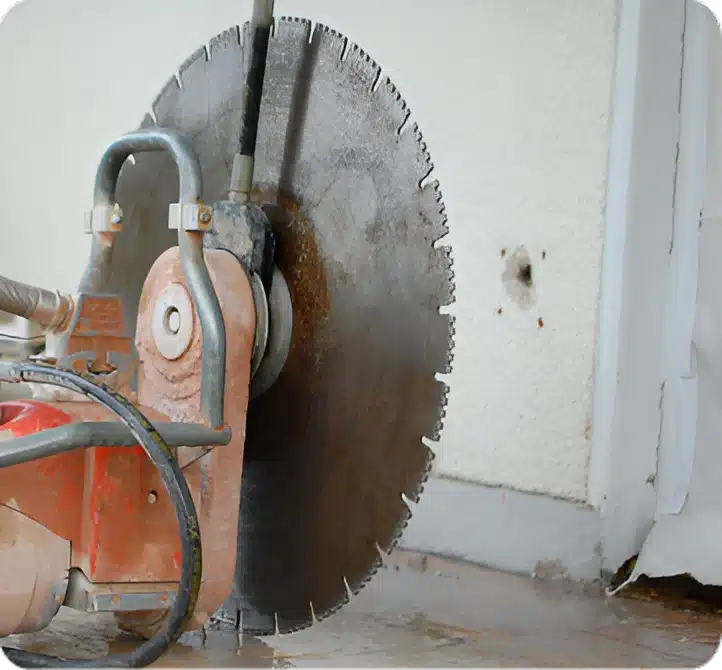
Defined Edge First
Removal rarely starts with a machine going in blind. A saw cut first defines the edge of the section coming out, so the surrounding slab isn’t damaged and the breakout stays inside the marked scope. That’s different from an opening or a core hole, where the surrounding slab was never meant to stand alone; in a removal job, the edge of every section is checked before the crew moves on, not just cut and cleared.
Reinforcement Separation And Disposal Costs
Pre-1990 Sites
Asbestos Checks On Pre-1990 Concrete
Concrete and associated materials poured or laid before the early 1990s carry a real possibility of asbestos-containing products nearby, sheeting, fittings or backing materials. WorkSafe Victoria guidance treats undocumented pre-1990 sites as requiring an assessment before demolition or removal work starts. Skipping that check isn’t a shortcut; it’s a health and safety risk that can also stop a job cold once it’s discovered mid-removal, so it gets confirmed up front on any older Melbourne site.Removal On A Live, Trading, Or Program Driven Site
Site Assessment
Every site walked before quoting, checking access, reinforcement and asbestos risk.
Cutting & Breakout
Saw cut definition first, then controlled removal.
Clean-Up & Disposal
Slurry and debris cleared, waste sorted and disposed of properly.
Skip Bin Versus Direct Tipper Disposal
Small residential jobs often work well with a skip bin on site, loaded as the job progresses and collected once full. Larger commercial or civil jobs typically move straight to direct tipper haul, taking broken concrete straight to a recycling facility, which cuts down on double-handling and keeps a busy site clearer during the works. Which option makes sense depends on job size, access for a skip truck, and how much concrete is coming out.
Proven Removal Capability, From Speedy Way To Your Site
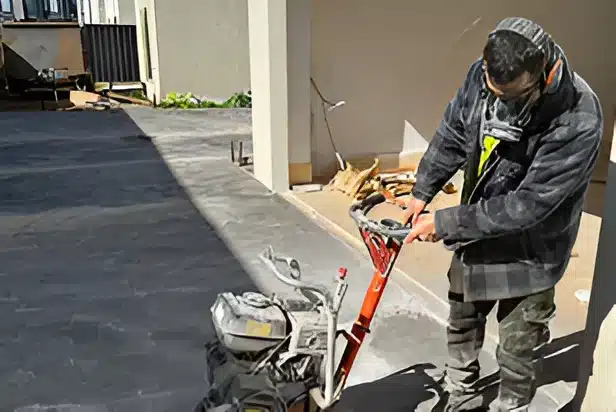
Speedy Way
Concrete removal is proven capability here, not a side note. At Speedy Way, that meant 400mm deep removal across roughly 500 metres of floor sawing, edges checked before the crew moved on. That same standard, saw cut definition, reinforcement handling, edge checks and a clean handover, applies whether the job is a 400-metre industrial floor or a single driveway.