


WorkSafe Compliance On Site
A WorkSafe-compliant concrete cutting site looks less like a checklist and more like a routine nobody has to think about twice: water on the blade before the cut starts, a scan done before the saw goes anywhere near the slab, and a crew that already knows who is coordinating access before anyone shows up. None of that is visible from a phone quote or a set of before-and-after photos, which is exactly the problem for a site supervisor trying to work out whether a subcontractor is carrying the risk properly or just hoping nothing goes wrong.What WorkSafe Victoria Expects On A Concrete Cutting Site
Wet Cutting And Dust Suppression As Standard, Not An Extra
Wet cutting is not an upgrade on a compliant site; it is the default. Dry cutting has a place on small, isolated cuts, but wet cutting is standard on any real-scale concrete cutting job, and it is non-negotiable on an occupied site where dust complaints follow fast if it gets skipped. Water volume differs by task: a core drill needs a steady trickle at the bit, while a full slab cut demands a higher flow to suppress dust across the whole blade path. Getting that water budget wrong risks a dry patch mid-cut, exactly the gap dust suppression exists to close.
Managing Silica Dust Exposure Within The 0.05mg/M3 Limit
Water Suppression
Matched to blade or bit, not a single flow rate used everywhere.
Extraction
On-tool or local extraction where wet cutting alone will not hold the limit.
Respiratory Protection
A backup control, not a substitute for water and extraction.
Personal Protective Equipment For Every Crew Member On Site
Whole-Crew Standard
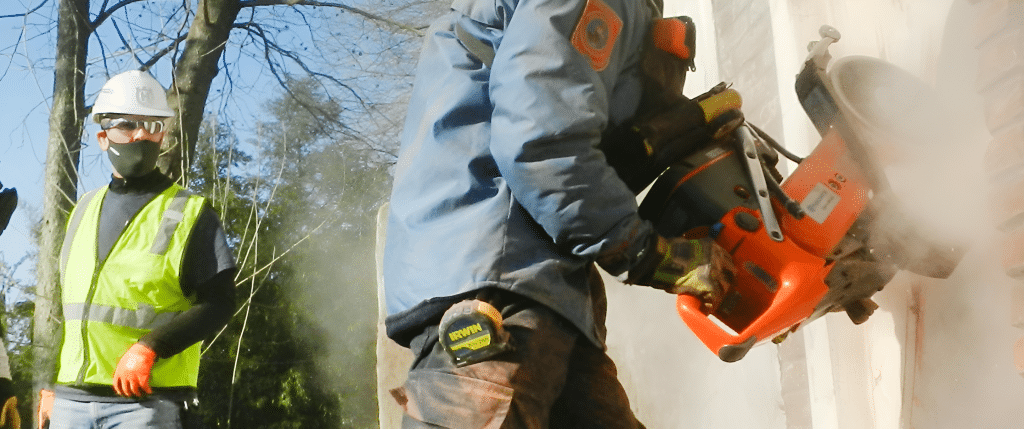
Sturdy boots, cut-resistant garments, gloves, eye protection and hearing protection are standard on every crew member, not just the operator running the saw. Concrete cutting throws chips and shards further than people expect, so anyone in the work area needs the same protection as the person on the blade. Ear protection matters just as much: a saw running for hours produces sustained noise, and hearing damage builds up over a career, not in a single job.Confirming What’s Behind The Slab Before The Saw Starts
Identify
Reinforcement, conduit, and live cable get identified first.
Mark Up
Findings get marked directly on the concrete so the crew and the client can both check the cut line.
Confirm, Then Cut
Cutting only starts once the read is confirmed, not worked out mid-job with the saw already running.
Occupied Site Protocol
Noise Control And Communication On An Occupied Or Trading Site
A school with students on site or a shopping centre still trading needs more than PPE; it needs communication. Adjacent trades and site occupants need to know when and where cutting will happen and how access is restricted around it. Noise gets managed as an exposure across the whole shift, not a guessed decibel number, and coordinating noisy work into a window that suits the site is part of the plan, not an afterthought once the saw is already running.Slurry Management And Site Clean-Up Before Handover
Licensing, Insurance And Public Liability Cover As Standard
Every job runs fully licensed, insured and WorkSafe Victoria compliant, with full public liability cover as standard, not an add-on. That is not a marketing line; it is what carries the risk on a live site instead of leaving it with the builder or facilities manager who booked the job. Twenty-plus years and 1,000-plus residential, commercial and industrial projects sit behind that standard, family-owned and operated, with the same crew that quotes the job running it on the day.
Coordinating Safely Around Other Trades On A Live Program
Lowther Hall
Live school site, coordinated around students and staff.
Karingal Hub
Operational, trading shopping centre.
BYD Kew
Showroom fit-out on a live automotive site.
Equipment Checks That Prevent An On-Site Incident

Checked Every Time
Guards, blades or bits, hoses, leads and water or extraction components all get checked before use, every time, not just when something looks obviously wrong. A dull or damaged blade is a safety risk as much as a quality one, and industry-grade equipment, Husqvarna saws and diamond core rigs kept to manufacturer limits, is what keeps results consistent from a domestic core hole to a full commercial floor cut. Stopping to reassess when the material or the equipment behaves differently from the plan is a sign of a compliant crew, not a delay.Where It Breaks Down
What A Non-Compliant Site Gets Wrong
A non-compliant site usually gets the small things wrong first: dry cutting on a job that needed water, a scan skipped because the slab “looked fine”, PPE treated as optional for anyone not holding the saw, or a quote guessed over the phone instead of assessed on site. None of those failures look dramatic on their own, but stacked together they are how a clean job turns into a structural callback, a dust complaint, or worse, an injury that a proper process would have prevented.Booking A Crew That Treats Compliance As Routine, Not An Afterthought
Standard, Not A Sales Pitch
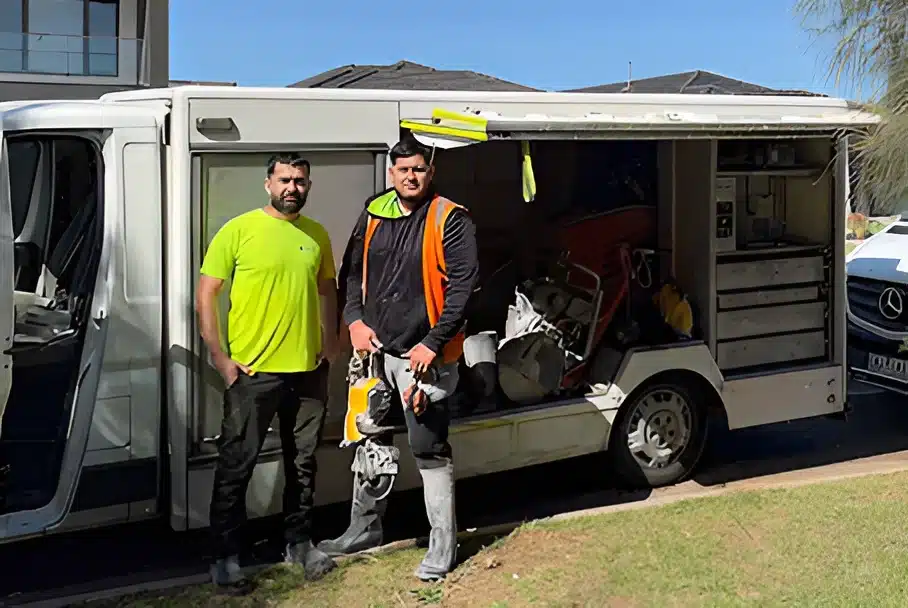
Compliance should not be something a client has to ask about or check up on halfway through a job; it should be the standard the crew already works to before the phone even rings. That is the difference between a subcontractor who mentions WorkSafe on the website and one who scans first, cuts wet, and clears the site before handover as a matter of course. Melbourne Concrete Cutters runs that way on every job, fully licensed, insured and WorkSafe compliant, family owned and operated for 20-plus years.